



IQF frozen mango is increasingly used by food manufacturers, F&B chains, and importers thanks to its ability to retain much of the natural flavor, color, and nutritional value of fresh mangoes. It also offers practical advantages in terms of portion control, year-round availability, and production efficiency.
But what exactly is IQF? How does the quick-freezing process work, and how can IQF mango be used in smoothies, bakery products, and yogurt? This article explains the technology, production process, and key applications of IQF frozen mango in the food industry.
What Is IQF? Understanding Individual Quick Freezing Technology
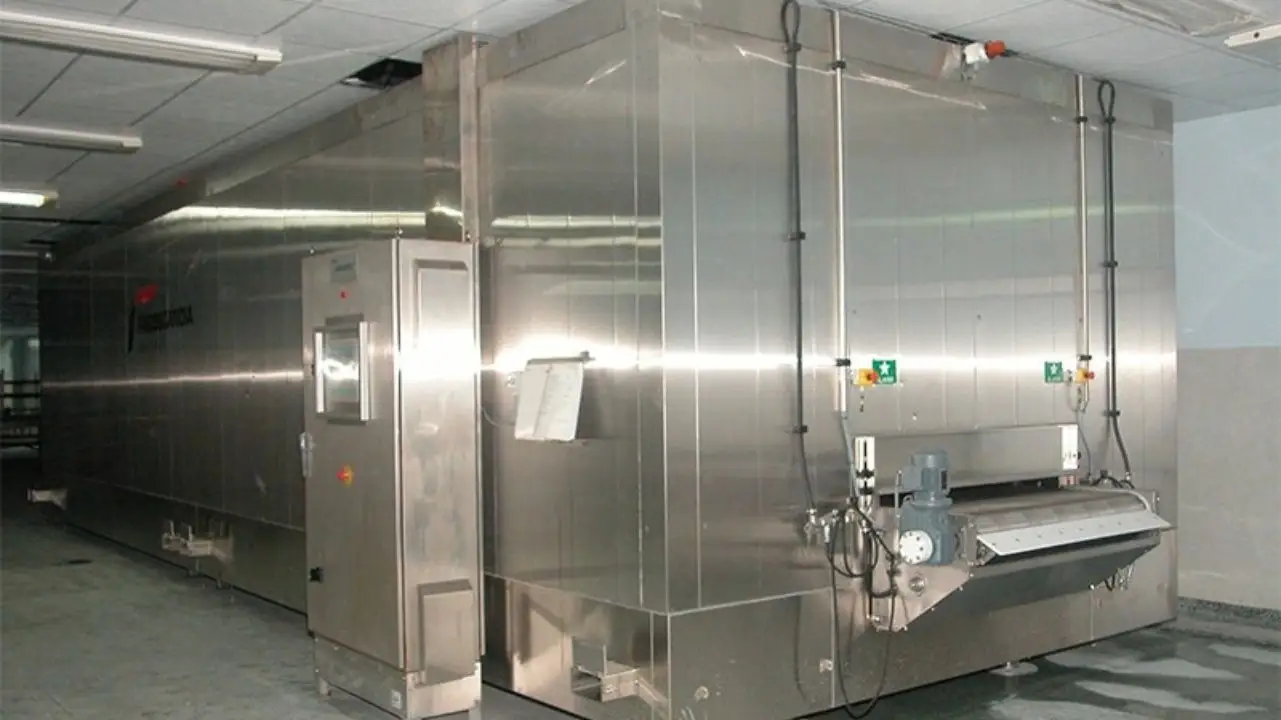
IQF stands for Individual Quick Freezing, a technology that rapidly freezes individual pieces of food rather than freezing them together in a solid block.
Unlike conventional bulk freezing, IQF technology freezes each mango piece separately within a relatively short period, typically ranging from a few minutes to several dozen minutes, depending on the size of the product and the freezing equipment used.
The key advantage of IQF technology lies in its rapid cooling process. By quickly lowering the temperature, it limits the formation of large ice crystals within the mango’s cells, helping minimize cellular damage compared with slower freezing methods.
As a result, IQF mango can retain its texture more effectively and experience less moisture loss during thawing.
Another important advantage is that individual mango pieces remain separate rather than freezing together into large blocks. This allows food manufacturers to measure and use the exact quantity needed without thawing an entire package, improving portion control and production efficiency.
IQF Frozen Mango Production Process
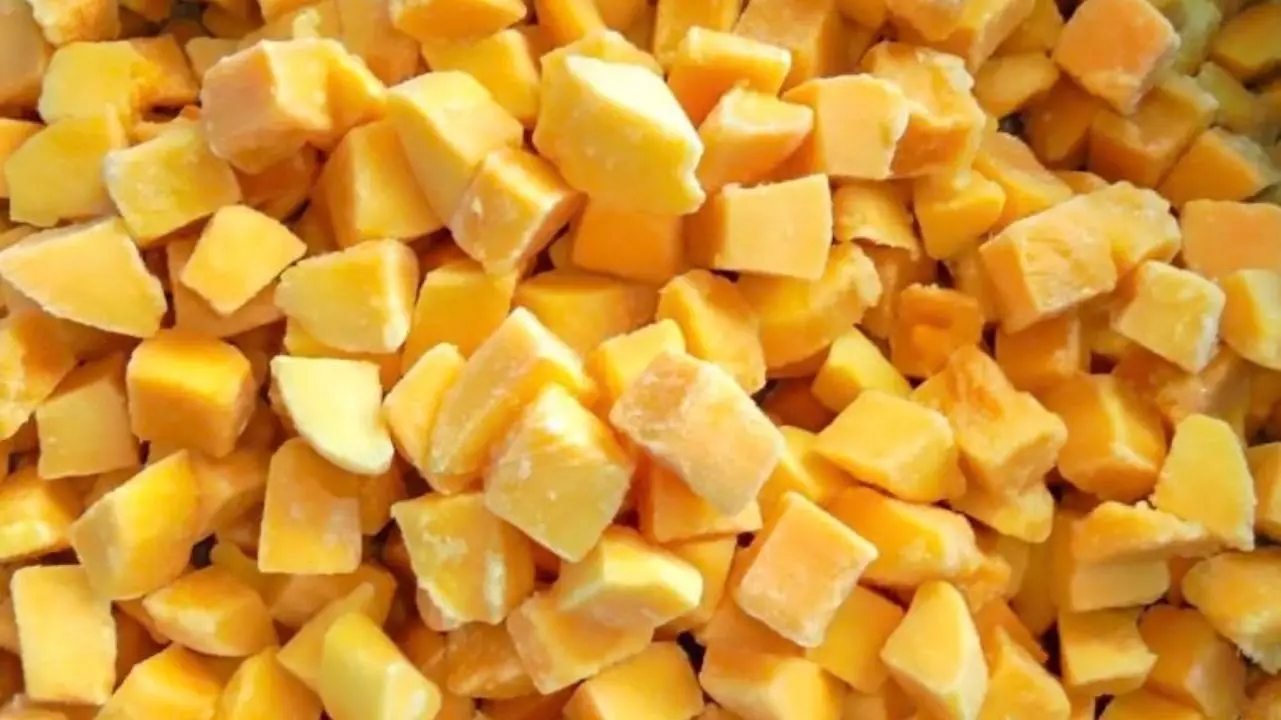
Producing consistent, high-quality IQF mango requires careful control of raw materials, processing equipment, temperature, and storage conditions throughout the production process.
A typical IQF mango production process consists of three main stages: raw material selection and preparation, individual quick freezing, and packaging and cold storage.
Raw Material Selection and Preparation
Mangoes intended for IQF processing are generally harvested at an appropriate stage of ripeness to ensure desirable color, sweetness, and characteristic mango aroma.
In Vietnam, varieties such as Hoa Loc mango, Cat Chu mango, and Keo mango may be selected depending on raw material availability, quality specifications, and the intended application.
After harvesting, the mangoes are sorted, washed, peeled, pitted, and cut according to the specifications of each order.
Common cutting formats include diced mango, mango slices, and mango chunks. In international trade, these formats are generally referred to as mango dice, mango slices, and mango chunks.
Maintaining relatively uniform piece sizes helps ensure consistent freezing performance and allows the finished product to meet the requirements of industrial food processing lines.
Quick Freezing Using IQF Equipment
After preparation, the mango pieces are transferred to an IQF freezer, where they are rapidly cooled until the required product core temperature is reached.
In air-based IQF systems, a conveyor belt carries the mango pieces through a freezing chamber. High-velocity cold air circulates around the product, promoting efficient heat transfer and rapid freezing.
A typical IQF freezing system consists of a freezing chamber, refrigeration and air distribution components, a conveyor system, and temperature controls.
Depending on the equipment design, the system may use a mesh conveyor belt or fluidized-bed technology to maximize contact between the mango pieces and the cold air.
In air-based IQF production lines, freezing chamber temperatures may range from -30°C to -40°C or lower, depending on the characteristics of the raw materials and the equipment used.
Freezing speed plays an important role in determining the quality of the finished product. When mango pieces are frozen rapidly and evenly, the formation of large ice crystals is reduced, helping minimize moisture loss and structural changes after thawing.
Selecting appropriate IQF freezing equipment also depends on production capacity, mango piece size, and the quality requirements of the finished product.
Packaging and Cold Storage
After freezing, IQF mango is packaged under temperature-controlled conditions to minimize thawing and refreezing.
Depending on the packaging specifications, the product may be packed in food-grade polyethylene (PE) bags or PE-lined cartons.
For export markets, packaging requirements are typically agreed upon between the supplier and importer based on the intended application, order volume, and transportation conditions.
Finished products are generally stored continuously at -18°C or below. Maintaining an uninterrupted cold chain from the production facility to the importer’s warehouse is essential to minimizing quality deterioration.
Why Do F&B Businesses Choose IQF Mango Over Fresh Mango?
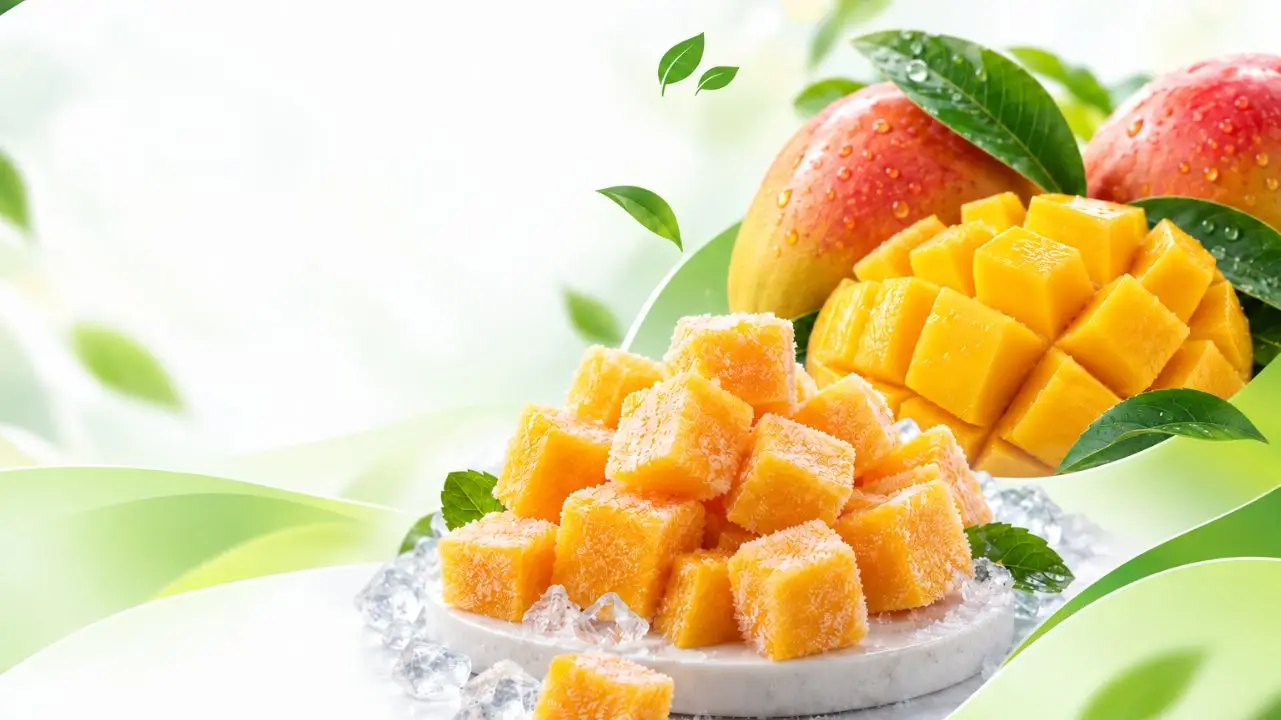
For manufacturers of juices, smoothies, yogurt, and bakery products, using fresh mangoes can present several challenges, including seasonal price fluctuations, variations in raw material quality, and processing losses during preparation.
IQF frozen mango helps address many of these challenges.
Because the mangoes are already peeled, pitted, and cut to the required specifications, manufacturers can significantly reduce labor requirements and preparation time.
The removal of peels and pits before freezing also helps reduce processing waste at the manufacturing stage, improving raw material utilization.
In addition, IQF mango allows businesses to maintain a more consistent supply of raw materials throughout the year. Even when fresh mangoes are out of season in a particular region, manufacturers can continue production using properly stored frozen inventory.
These advantages make IQF mango particularly useful for businesses that require consistent ingredients, standardized recipes, and reliable production schedules.
Applications of IQF Mango in the F&B Industry
IQF frozen mango is a versatile ingredient suitable for a wide range of food and beverage applications.
Its convenience, portion control, and year-round availability make it a practical option for both industrial food manufacturers and commercial F&B operators.
Smoothies and Blended Beverages
IQF mango is widely used in smoothies and blended beverages.
For smoothie chains, juice bars, and bottled beverage manufacturers, frozen mango provides a convenient fruit base that can create a naturally thick and smooth texture while reducing the need for additional ice.
Because individual IQF mango pieces remain separate, staff can accurately measure the required quantity for each blending batch.
This helps businesses maintain more consistent flavor profiles across different locations within the same F&B chain.
IQF mango is also convenient for beverage manufacturers that require standardized ingredients and efficient preparation processes.
Yogurt and Dairy Products
In fruit yogurt production, IQF mango dice or small mango pieces can be incorporated into yogurt formulations or prepared fruit mixtures.
The individually frozen pieces are easy to portion, while their relatively well-preserved structure can help deliver a recognizable fruit texture when handled appropriately.
This allows manufacturers to create yogurt products containing visible pieces of real mango, enhancing their appearance, texture, and overall sensory appeal.
The appropriate mango size and preparation method should be selected according to the yogurt formulation and production process.
Bakery and Pastry Products
IQF mango dice can be used as fillings or toppings for fruit tarts, muffins, cheesecakes, and other bakery products.
Because the pieces are individually frozen, they are easier to portion and distribute during food preparation.
Depending on the recipe, IQF mango may be incorporated into fillings, pastry creams, or fruit toppings.
Manufacturers should consider moisture release during thawing and baking, as this can affect the texture and consistency of the finished product.
Beyond bakery applications, IQF mango is also used in fruit jams, sauces, ice cream, dessert toppings, and other processed food products.
Frequently Asked Questions About IQF Frozen Mango
Does IQF Mango Retain the Same Nutritional Value as Fresh Mango?
IQF technology helps preserve much of the vitamin and mineral content of mangoes through rapid freezing and stable low-temperature storage.
However, some nutrient loss may occur during preparation, freezing, and storage. Vitamin C, in particular, can be sensitive to processing and storage conditions.
The nutritional quality of IQF mango depends on several factors, including the quality of the original fruit, processing methods, packaging, and storage conditions.
When properly processed and stored, IQF mango can be a convenient and nutritious alternative to fresh mango in many food applications.
What Is the Shelf Life of IQF Mango?
When continuously stored at -18°C or below, IQF mango may have a shelf life of up to 24 months from the production date, depending on the product specifications, packaging, and validated storage conditions.
Some manufacturers may recommend using the product within the first 12 to 18 months to maintain optimal sensory quality.
Importers and food manufacturers should always check the supplier’s technical specifications, product labeling, and recommended storage conditions to confirm the applicable shelf life.
Does IQF Mango Need to Be Thawed Before Use?
This depends on the intended application.
For smoothies, IQF mango can often be used directly from frozen to provide a naturally chilled and thick texture.
For yogurt and bakery applications, controlled thawing may be necessary depending on the formulation and production process.
When thawing is required, refrigeration at approximately 2–4°C can help maintain product quality and reduce food safety risks. The product should be handled according to the supplier’s instructions and the manufacturer’s food safety procedures.
Which IQF Mango Cut Is Best for Food Manufacturers?
The appropriate cutting format depends on the intended application.
IQF mango dice measuring approximately 10 × 10 mm or 15 × 15 mm can be suitable for yogurt, pastry fillings, and other products that require smaller fruit pieces.
Larger mango slices or chunks are often used in smoothies, dessert toppings, and other applications where larger pieces are preferred.
Importers should clearly communicate their required specifications to suppliers, including cut size, mango variety, ripeness, packaging, and intended processing application.
This helps ensure that the selected product is compatible with their production lines and quality requirements.
IQF Frozen Mango Supply from VILIFA
IQF frozen mango provides an efficient ingredient solution for F&B businesses seeking consistent product quality and a reliable year-round supply of mango.
Its individually frozen format, relatively well-preserved texture and flavor, and versatility across food and beverage applications make it suitable for a wide range of industrial food processing requirements.
VILIFA is a frozen fruit processing company offering IQF frozen mango products for domestic and international F&B markets.
If your business is looking for a reliable IQF mango supply, contact fanpage VILIFA to discuss your required product specifications, packaging options, and order volumes, and request a quotation tailored to your production needs.