



Frozen durian helps businesses secure a more stable supply of raw materials, reduce dependence on harvest seasons, and maintain year-round operations. However, quick freezing and conventional freezing differ in freezing speed, the texture of durian flesh after thawing, and production costs.
Understanding these differences can help importers, food manufacturers, and F&B chains choose the right type of frozen durian for their business needs.
What Are Quick-Frozen and Conventionally Frozen Durian?
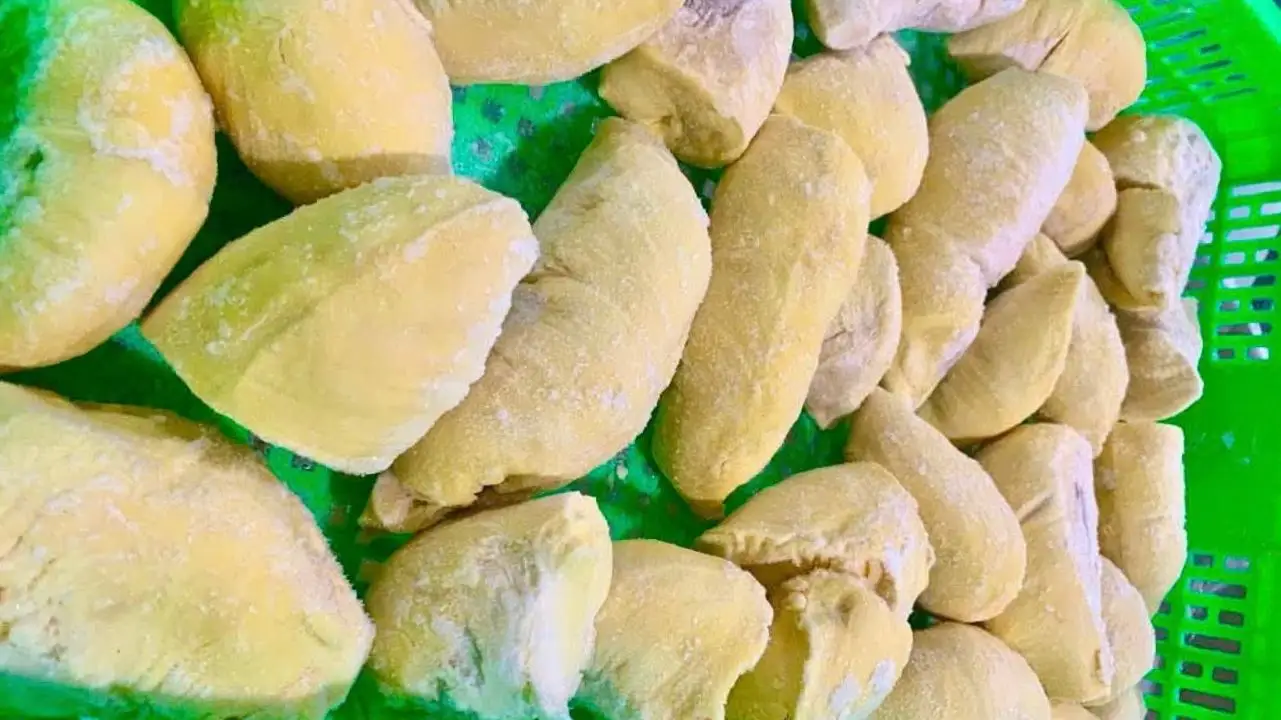
Both methods use low temperatures to freeze the product and extend storage life. The main difference lies in how quickly the temperature is reduced and how much the freezing process affects the product’s cellular structure.
Quick-Frozen Durian
Quick-frozen durian is frozen using specialized equipment that rapidly lowers the product temperature within a relatively short period.
This process helps limit the formation of large ice crystals inside the cells, which can contribute to better retention of the durian flesh structure after thawing.
Depending on the production scale, manufacturers may use forced-air freezing systems, liquid nitrogen, or IQF (Individual Quick Freezing) technology.
IQF allows individual durian segments to be frozen separately, reducing the likelihood of pieces sticking together and making portioning easier during food processing.
The actual freezing time depends on the size of the product, the capacity of the freezing equipment, and the cooling method used.
Conventionally Frozen Durian
Conventionally frozen durian is a common term for products frozen using a slower cooling process. In this article, the term refers specifically to slow freezing.
When freezing takes longer, ice crystals have more time to grow, increasing the risk of damage to the cellular structure.
After thawing, durian flesh may become softer and release more liquid compared with quick-frozen products under similar conditions.
However, final product quality also depends on factors such as durian variety, ripeness, packaging format, and storage conditions.
How Do Quick-Frozen and Conventionally Frozen Durian Differ?
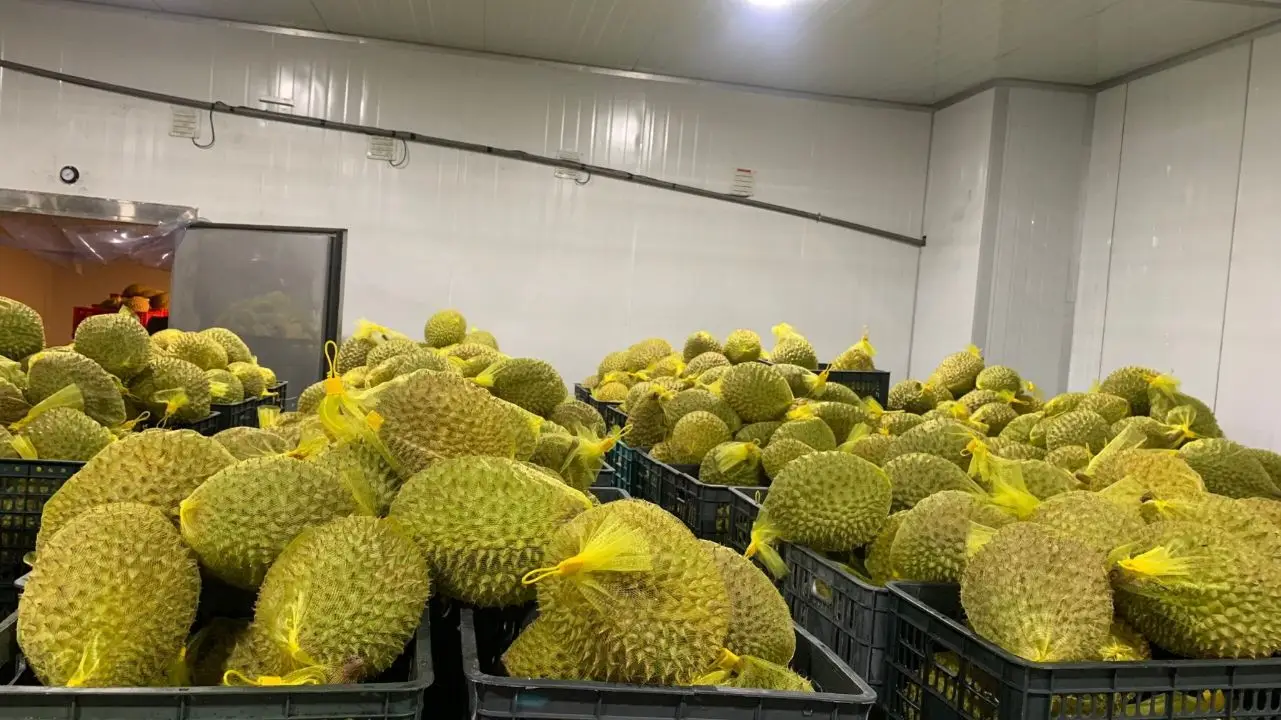
The main differences between the two methods can be seen in freezing speed, ice crystal size, and product quality after thawing.
| Criteria | Quick Freezing | Conventional Freezing |
|---|---|---|
| Freezing speed | Fast | Slower |
| Ice crystals | Generally smaller | Tend to be larger |
| Texture after thawing | Better at limiting cellular damage | Higher risk of texture changes |
| Drip loss | May be better controlled | May be higher |
| Portioning | Convenient when IQF is used | Depends on packaging format |
| Production cost | Depends on technology and capacity | Depends on equipment and operating time |
Why Does Freezing Speed Affect Durian Quality?
In frozen durian processing, the rate at which the temperature decreases affects the size of ice crystals formed within the product.
During slow freezing, ice crystals have more time to grow, increasing the risk of cell damage and changes in the texture of the durian flesh.
In contrast, quick freezing generally produces smaller ice crystals, which can help reduce moisture loss and maintain the product structure more effectively under comparable conditions.
However, quick freezing does not guarantee that frozen durian will remain exactly the same as fresh fruit. Final quality is also influenced by the initial raw material, processing time, and storage conditions.
For businesses, evaluating the product after thawing is often more useful than relying solely on the name of the freezing technology.
Which Type of Frozen Durian Should Businesses Choose?
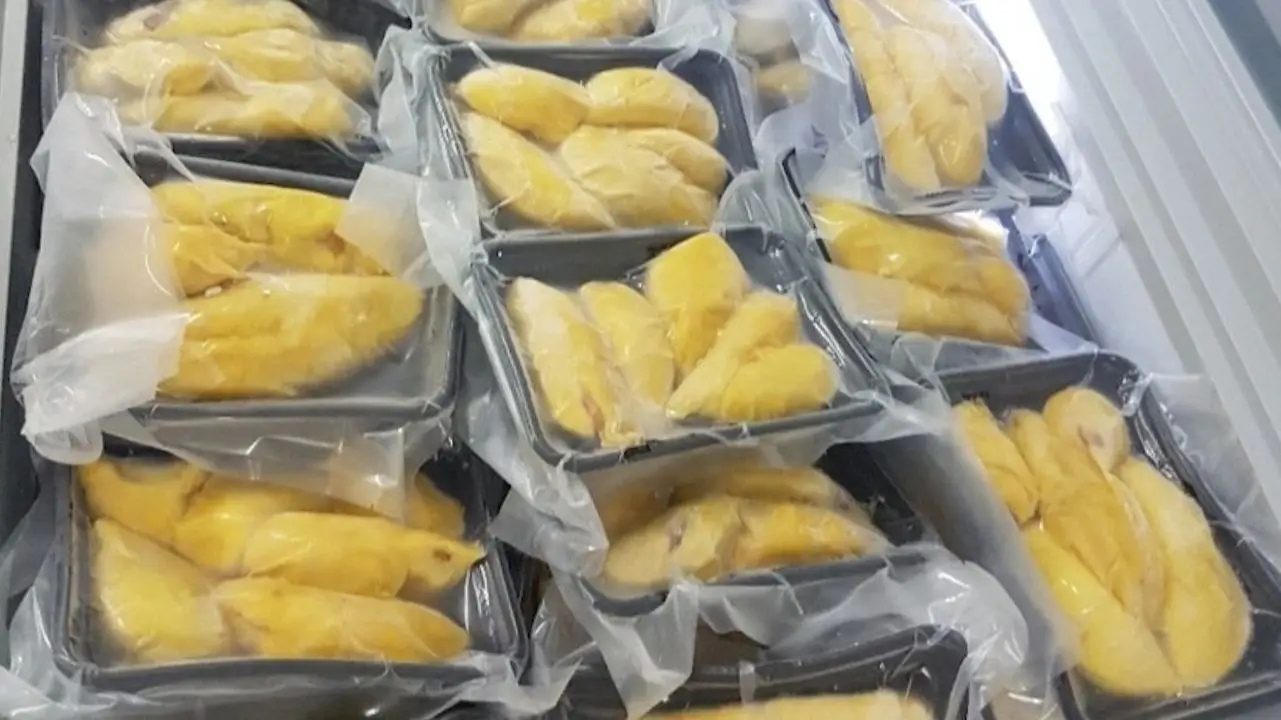
The right option depends on the intended end product, customer requirements, and actual usage costs.
Different business models may prioritize different factors when sourcing frozen durian.
For Importers and Distributors
Importers should pay close attention to consistency between batches, packaging specifications, and the supplier’s ability to maintain the cold chain.
For export-grade frozen durian, sensory quality, food safety requirements, and traceability documentation should be agreed with the supplier in accordance with the requirements of the destination market.
If the durian segments are distributed for direct consumption, businesses should evaluate appearance, color, flavor, and texture after thawing.
For companies selling frozen durian in smaller portions, IQF products may offer greater convenience for portioning and quantity control.
For Food Manufacturers
Food manufacturers producing cakes, ice cream, beverages, or other processed products often use frozen durian flesh as an ingredient for blending, grinding, or mixing.
If the final product does not require the original durian segment shape to be retained, block-frozen durian may be considered, provided that it meets requirements for flavor, consistency, and post-thaw quality.
On the other hand, if intact durian pieces are required in the final product, flesh structure and the ability to separate individual pieces become more important.
For industrial processing, businesses should test the raw material on their actual production line to evaluate yield, product loss, processing efficiency, and total production cost.
For F&B Chains and Dessert Businesses
F&B chains typically require ingredients that are easy to portion and convenient to prepare.
Pre-portioned or individually frozen durian segments can help staff use the correct amount for each recipe without thawing a large block of product.
If durian flesh is mainly used in smoothies or blended beverages, businesses can choose a product format that matches their equipment and recipes without necessarily using IQF durian segments.
What Should Businesses Check Before Importing Frozen Durian?
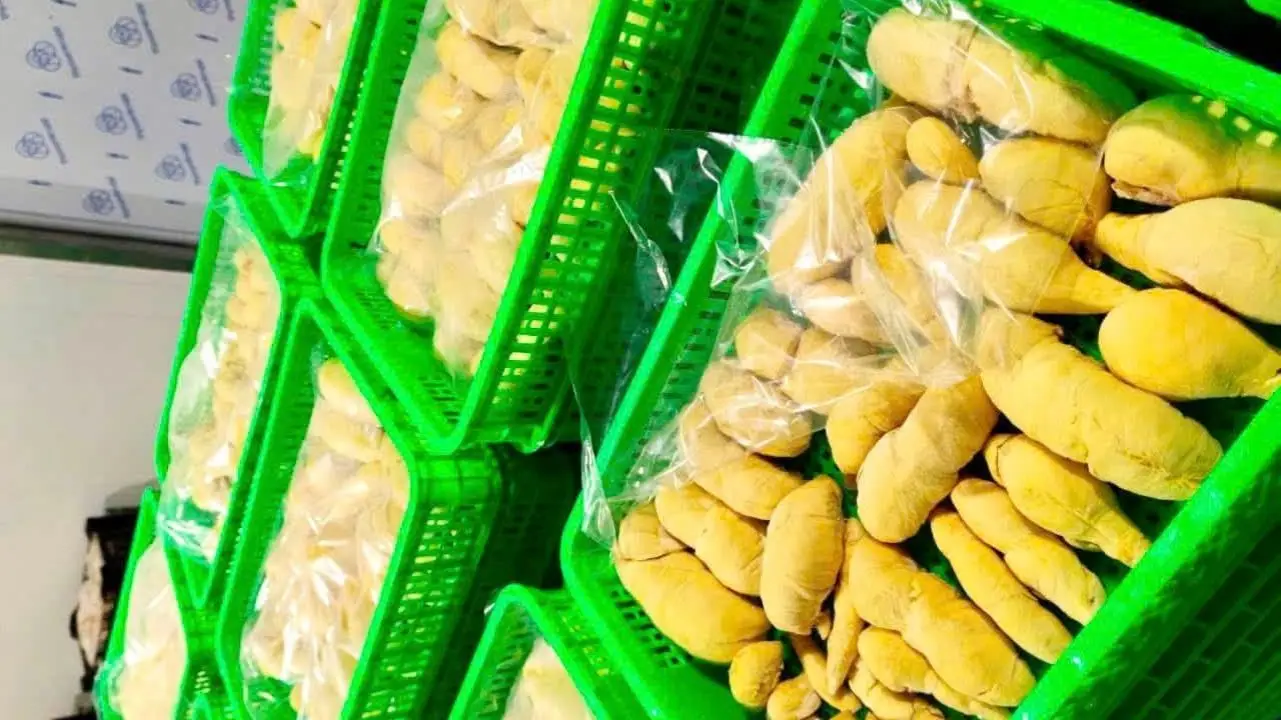
In addition to the freezing method, businesses should evaluate several factors that directly affect product quality and commercial performance.
Raw material: Identify the durian variety, maturity level, and condition of the fruit flesh before processing. These factors can influence flavor, color, and texture.
Quality after thawing: Check color, aroma, texture, and drip loss to determine whether the product is suitable for the intended application.
Packaging specifications: Choose packaging sizes that match production volume and cold-storage capacity.
Actual usage cost: Calculate costs based on usable product yield, including thawing losses and preparation requirements.
Quality documentation: Review traceability information, test reports, and other documents required by the destination market.
For businesses importing frozen durian for the first time, requesting samples before placing a large order can help evaluate whether the product meets actual usage requirements.
How to Store Frozen Durian Properly
Whether quick freezing or conventional freezing is used, maintaining a stable cold chain remains essential for product storage.
For many frozen food products, a storage temperature of around -18°C or below is commonly used. Businesses should follow the storage temperature and shelf-life instructions specified by the manufacturer.
Temperature fluctuations during storage should be minimized to reduce the risk of partial thawing and refreezing.
When receiving shipments, businesses should inspect the packaging condition, product temperature, and any abnormalities that may indicate cold-chain issues during transportation.
When thawing is required, the process should be carried out under controlled temperature conditions and according to the manufacturer’s instructions.
Conclusion
Quick-frozen and conventionally frozen durian mainly differ in the speed of temperature reduction and the resulting impact on the durian flesh after thawing.
For businesses targeting premium segments, export markets, or professional food manufacturing, quick-frozen durian may provide advantages in texture retention and portioning, depending on the product format and application.
Conventional frozen durian may still be suitable for applications where the original segment structure is less important or where the ingredient is intended for further processing.
Regardless of the freezing method, maintaining a stable cold chain and working with a supplier that has suitable quality-control capabilities remain important.
By understanding the differences between freezing methods, businesses can make more informed sourcing decisions and select the product format that best fits their operational requirements.
If your business is looking for a stable supply of frozen durian for domestic distribution or export, VILIFA can discuss product formats based on your specific business requirements.
Contact the VILIFA team to learn more about packaging specifications, quality requirements, and supply arrangements.