


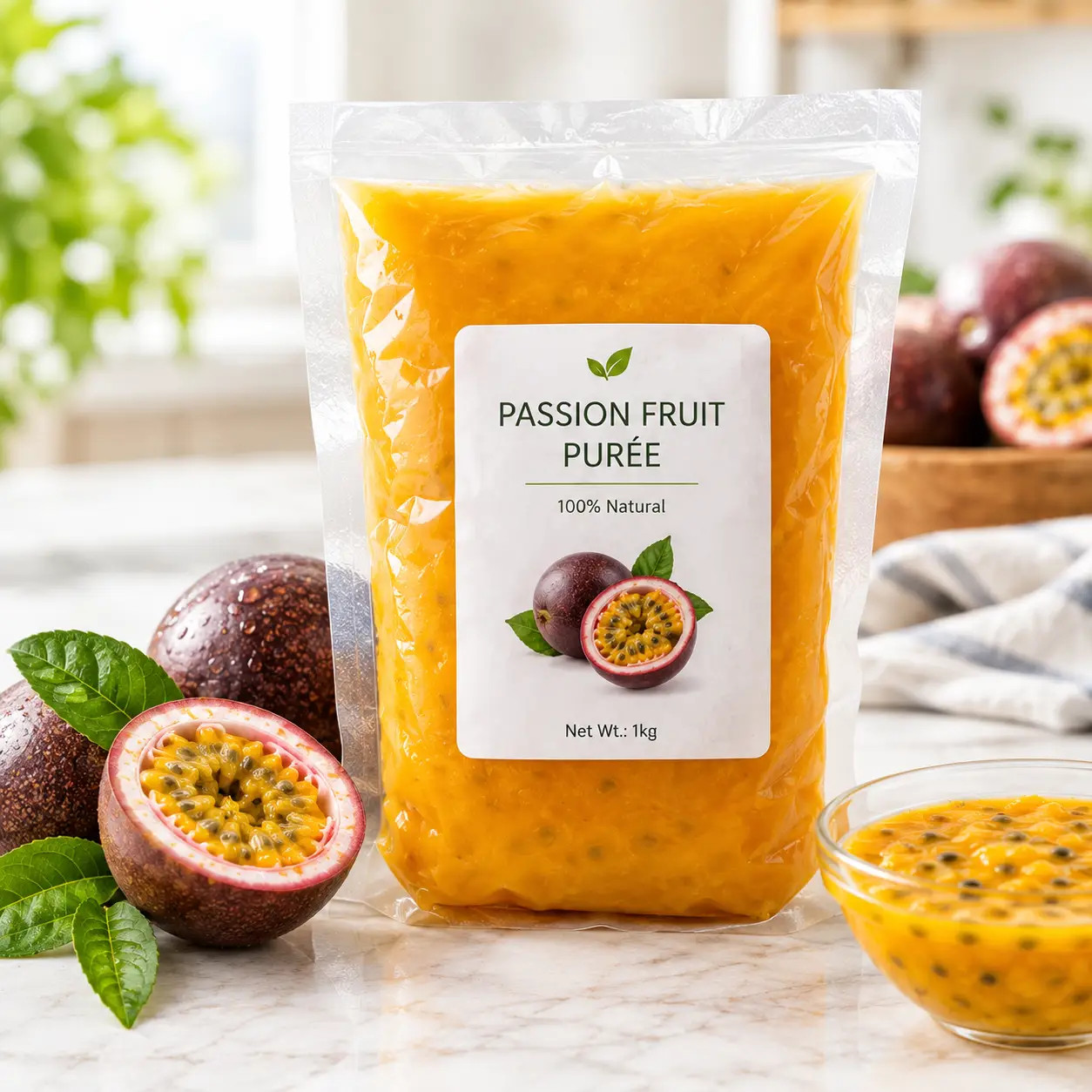

Passion fruit puree is a versatile ingredient known for its distinctive tropical aroma, bright sweet-tart flavor, and wide range of applications. From beverages and bakery products to ice cream and desserts, passion fruit puree can add a vibrant flavor profile while pairing well with many other ingredients.
What Is Passion Fruit Puree?
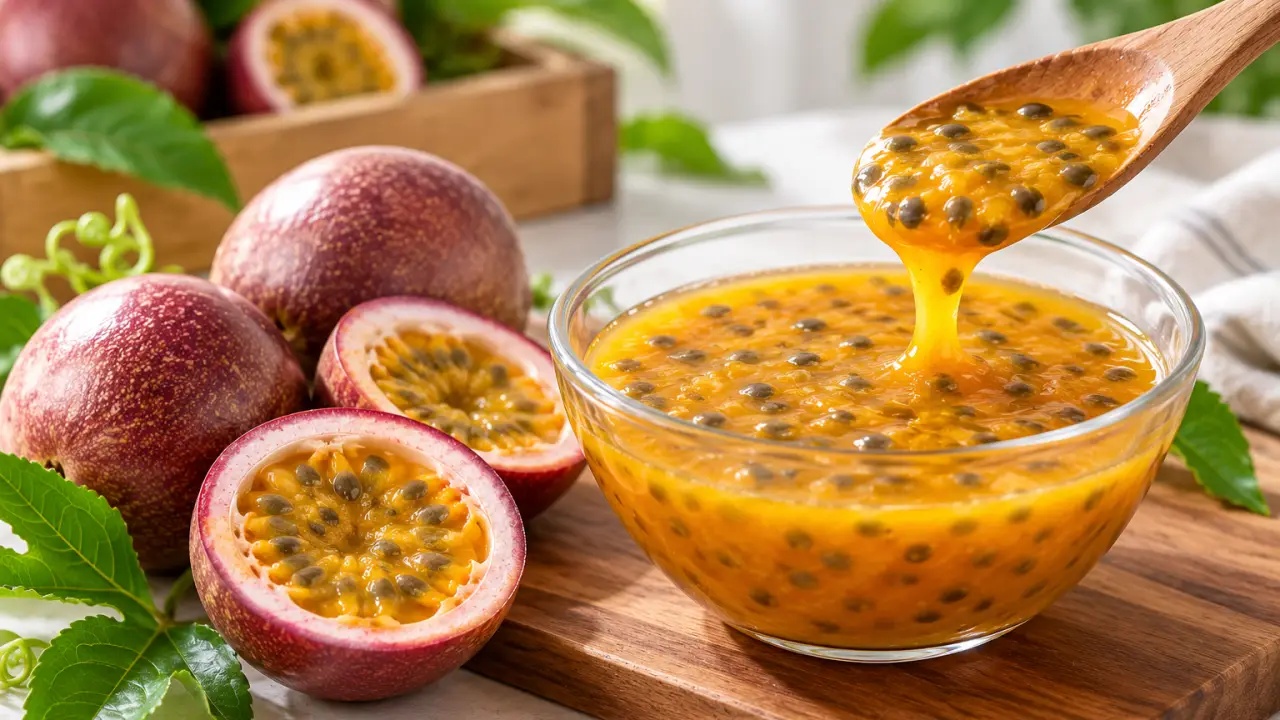
Passion fruit puree, also referred to as passion fruit pulp or frozen passion fruit pulp, is made from the edible flesh of fresh passion fruit after the outer rind has been removed. Depending on the product, the puree may contain both fruit pulp and seeds.
It is widely used as a semi-processed ingredient in the beverage, bakery, and ice cream industries because it helps reduce preparation time while providing a convenient source of passion fruit flavor for different recipes.
Unlike passion fruit syrup, which typically contains added sugar and may include ingredients used to adjust sweetness or texture, passion fruit puree is generally produced to retain more of the fruit’s natural characteristics.
Two product groups commonly found on the market are NFC puree (Not From Concentrate) and puree produced from reconstituted concentrate. NFC puree does not go through a concentration and reconstitution process, while reconstituted products are made by adding water back to concentrated fruit material.
Why Do F&B Businesses Use Passion Fruit Puree Instead of Fresh Fruit?
For beverage manufacturers, bubble tea chains, bakeries, and other large-scale F&B operations, working with fresh passion fruit can involve several operational challenges.
Acidity, sweetness, fruit yield, and raw material characteristics may vary depending on seasonality and sourcing conditions. In comparison, processed or frozen passion fruit puree can help businesses work with more standardized product specifications and streamline production.
Some practical advantages include:
- Reduced preparation labor: No need to cut the fruit, scoop out the pulp, or dispose of large amounts of rind.
- Lower raw-material waste: Fresh passion fruit provides only a portion of usable pulp, while prepared puree can be used directly in formulations.
- Better process control: Pasteurization or rapid freezing can support food-safety management when applied according to an appropriate production process.
- Greater supply flexibility: Processed puree can help businesses reduce their dependence on the immediate availability of fresh fruit during harvest seasons.
Types of Passion Fruit Puree Available on the Market
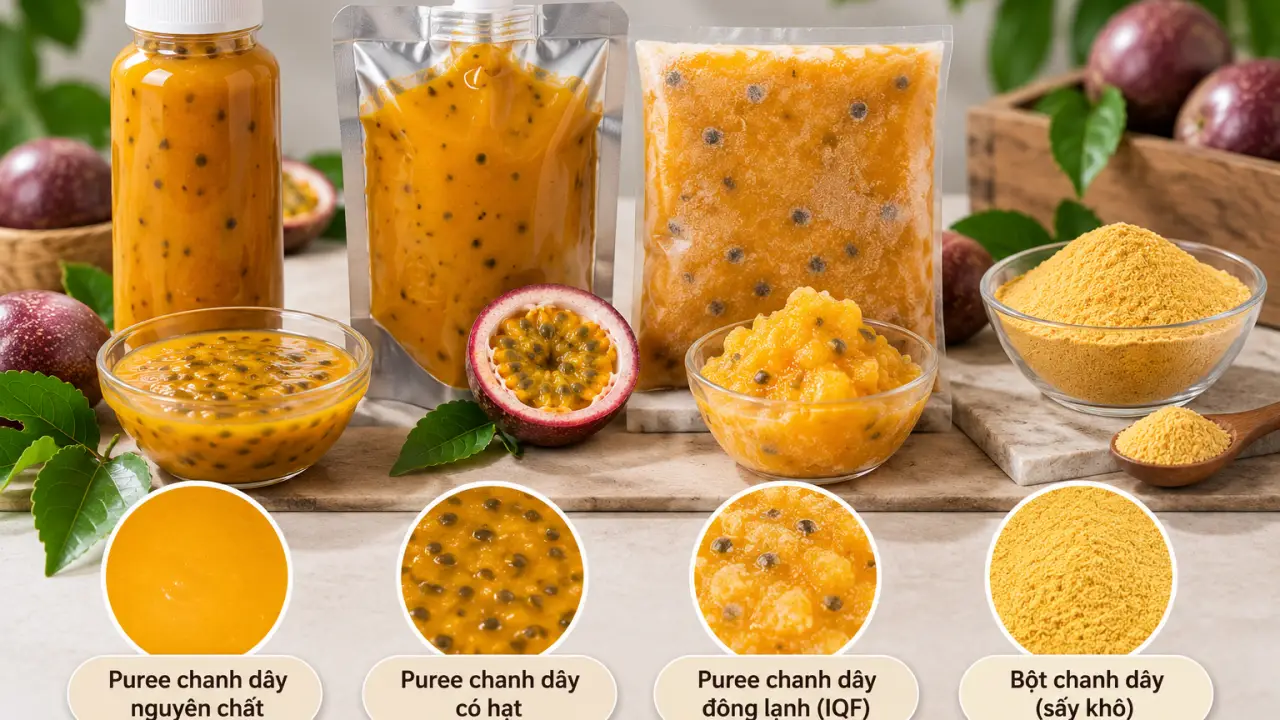
Frozen Passion Fruit Puree
Frozen passion fruit puree is processed and stored under frozen conditions.
This format is suitable for F&B companies, central kitchens, and food manufacturers equipped with frozen-storage facilities. Storage conditions and shelf life should follow the specifications provided for each individual product.
Aseptic Passion Fruit Puree
Aseptic puree is processed and packed under aseptic conditions.
This format can be suitable for businesses that require convenient storage, transportation, and large-scale use. Storage requirements before and after opening should follow the manufacturer’s instructions.
Passion Fruit Puree With Seeds
This type retains some or all of the passion fruit seeds.
It is particularly suitable for applications where businesses want the finished product to have a more recognizable passion fruit appearance, such as beverages, toppings, sauces, and certain desserts.
Seedless Passion Fruit Puree
For seedless puree, the seeds are removed to create a smoother and more uniform texture.
This format can be used in mousse, ice cream, sauces, cakes, beverages, and other applications where a smooth finished texture is preferred.
How to Use Passion Fruit Puree in Beverages
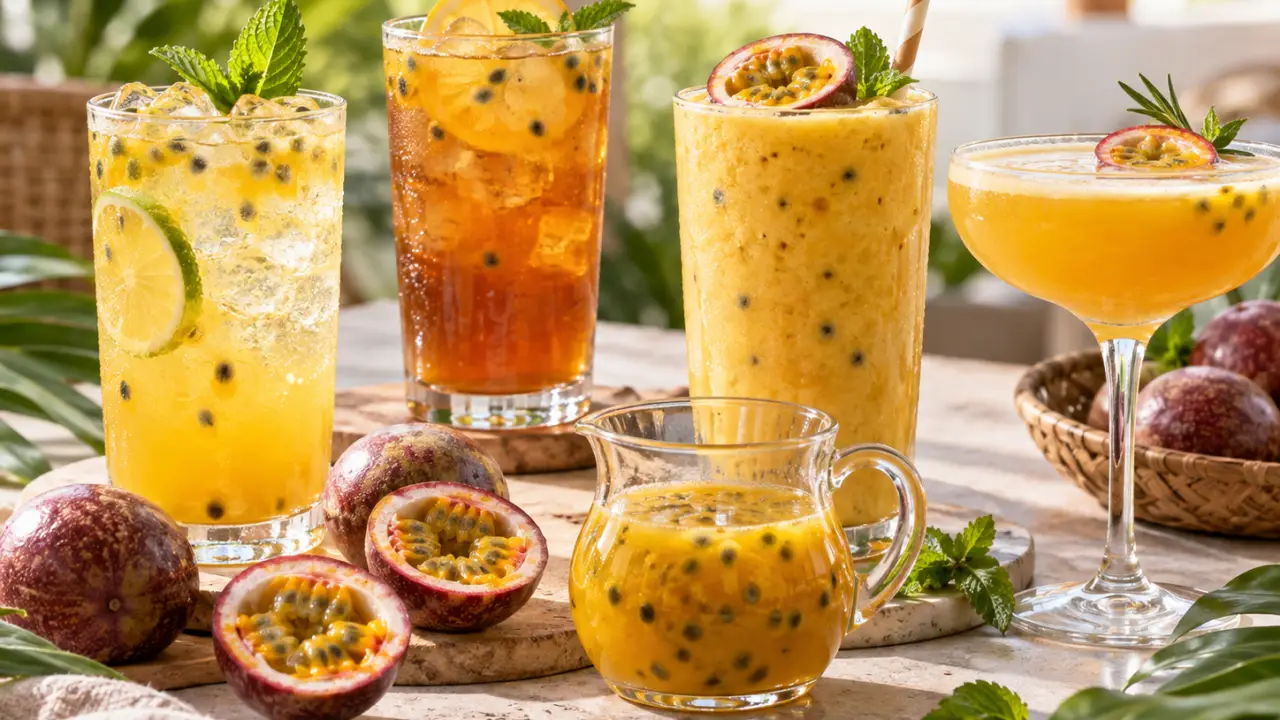
Passion fruit puree is widely used as a base ingredient in beverages thanks to its refreshing acidity, distinctive aroma, and attractive golden-yellow color.
Fruit Tea and Passion Fruit Tea
Passion fruit puree can be combined with black tea or oolong tea to create refreshing fruit-based drinks.
A reference formulation may use approximately 30–50 ml of puree for a 500 ml beverage, depending on the desired flavor profile and the characteristics of the puree.
The acidity of passion fruit can complement the slightly astringent character of tea. Mango, peach, or orange puree may also be combined with passion fruit to create more complex fruit blends.
Blended Drinks and Smoothies
Frozen passion fruit puree can contribute both flavor and body when blended with ice.
For smoothies, passion fruit can be paired with ingredients such as banana or mango to balance its acidity. In blended drinks, passion fruit syrup may also be added when additional sweetness is desired.
Soda and Mocktails
Passion fruit puree can also be used in sparkling beverages and mocktails.
One reference approach is to combine puree with chilled soda water at approximately a 1:4 ratio, then add mint and sweetener according to the desired recipe.
Its bright tropical flavor makes passion fruit particularly suitable for refreshing beverage menus.
How to Use Passion Fruit Puree in Bakery Applications
In bakery and pastry production, passion fruit puree can be incorporated into several components, from fillings and mousse to glazes and cake batters.
Fillings and Mousse
The acidity of passion fruit can help balance rich ingredients such as cream and butter, making it particularly suitable for European-style desserts and mousse cakes.
For mousse applications, puree may be combined with sugar and gelatin as part of the formulation.
A reference recipe may use approximately 100 g of puree for 200 g of whipped cream, although the exact ratio should be adjusted according to the desired texture, sweetness, and acidity.
Sauces and Glazes
Passion fruit puree can be cooked with sugar and pectin to create a glossy fruit glaze for tart, cheesecake, mousse cake, and other desserts.
Its natural acidity can help balance the sweetness of the finished dessert.
Cake Batter
Passion fruit puree may also be incorporated into sponge cakes, muffins, or other baked goods to introduce a subtle tropical flavor.
A reference formulation may use puree at approximately 10–15% of the flour weight, while adjusting other liquids in the recipe to maintain the desired batter consistency.
How to Use Passion Fruit Puree in Ice Cream
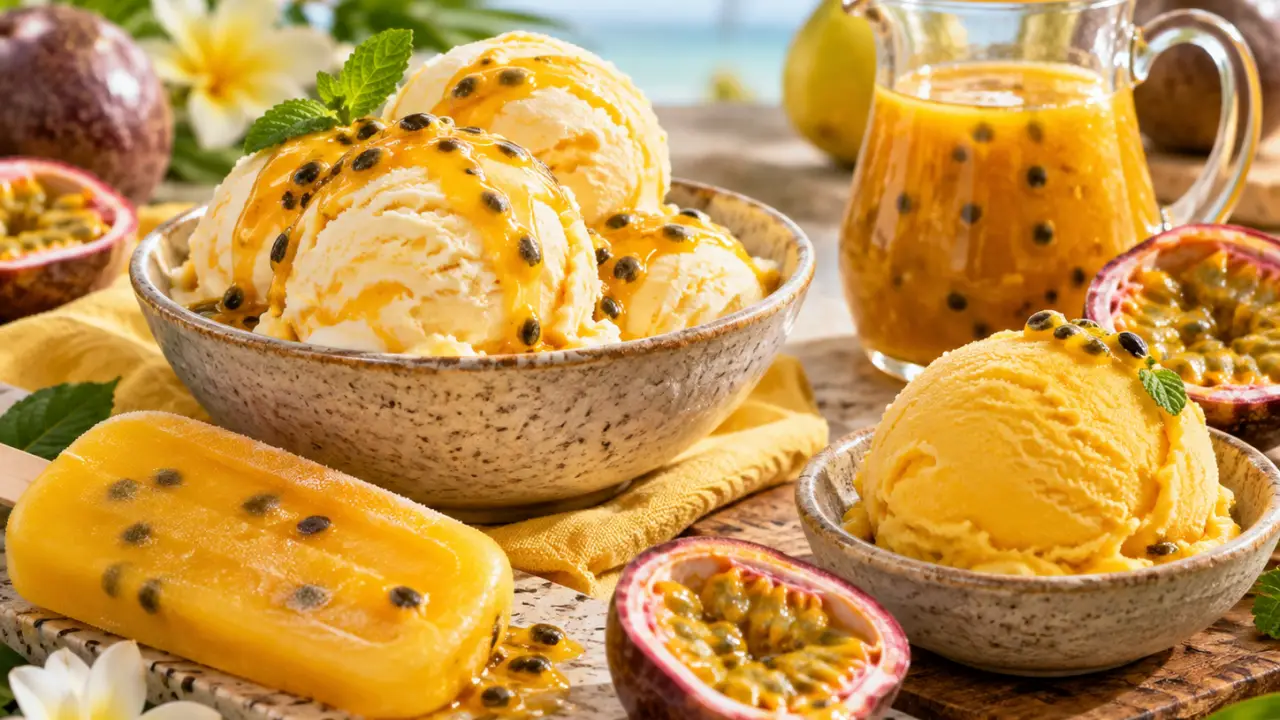
Ice cream is another application where passion fruit puree can be used effectively.
Gelato and Sorbet
Passion fruit sorbet can be produced using a relatively simple base of puree, sugar, and water.
For gelato, passion fruit puree may be incorporated into the dairy base after cooling, depending on the formulation and production method.
The exact amount of puree, sugar, and other ingredients should be adjusted according to the desired sweetness, acidity, solids content, and finished texture.
Ice Pops and Industrial Ice Cream
For larger-scale production, frozen puree can make it easier for manufacturers to calculate ingredient ratios and standardize formulations across production batches.
Passion fruit seeds may also provide a distinctive visual element in products where seeds are intentionally retained.
Important Considerations When Storing Passion Fruit Puree
Proper storage plays an important role in maintaining product quality.
- Frozen puree: Store at approximately -18°C and avoid repeated thawing and refreezing. When needed, the product may be thawed gradually under refrigeration before use.
- Aseptic or heat-treated puree: Store according to the manufacturer’s instructions before opening. Once opened, refrigerated storage and timely use are generally required according to the product specification.
- Passion fruit syrup: Keep in a cool, dry place away from direct sunlight and follow the storage instructions provided on the product label after opening.
For commercial use, businesses should always follow the technical specifications and storage recommendations provided for the specific product rather than applying a single storage rule to all passion fruit ingredients.
How to Choose a Passion Fruit Puree Supplier for Your Business
For importers, food manufacturers, and F&B companies, supplier selection should involve more than comparing prices.
Important factors to consider include:
- Raw material origin: Consider the sourcing region and the passion fruit variety, such as purple or yellow passion fruit, depending on the desired product characteristics.
- Production and quality control: Review the supplier’s food-safety management system, raw material controls, production process, and finished-product quality requirements.
- Customization capabilities: Depending on the project, businesses may need to discuss seed content, Brix requirements, packaging formats, or other product specifications.
- Supply capability: For regular B2B purchasing, businesses should evaluate the supplier’s ability to support expected volumes and long-term supply requirements.
Vietnamese passion fruit is increasingly used as a raw material for different processed fruit applications. For businesses sourcing passion fruit puree for beverage, bakery, ice cream, or food manufacturing, working with a supplier that can clearly communicate product specifications and supply requirements can help improve procurement efficiency and quality control.
VILIFA supplies Vietnamese agricultural products, including passion fruit products for beverage, bakery, ice cream, and food-industry applications.
Businesses looking for passion fruit puree can contact VILIFA to discuss product specifications, packaging requirements, expected order volumes, supply capabilities, or sample requests.
For further information, please contact the VILIFA team via hotline or Fanpage.