



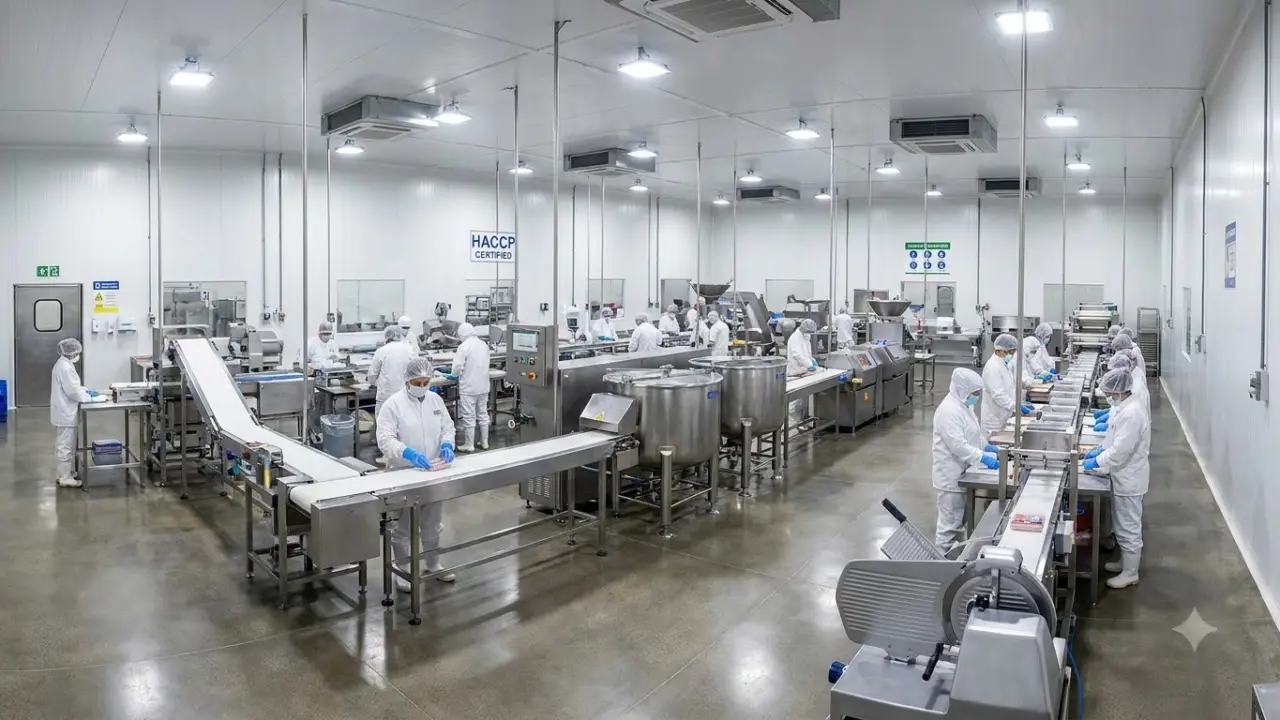
Businesses looking to develop soft-dried fruit products under their own brand do not necessarily need to invest in an entire production line. Through an OEM or private-label model, companies can work with a manufacturing partner to develop products based on agreed requirements.
Depending on the project, both parties can discuss fruit types, finished-product characteristics, formulation, packaging specifications, expected order volume, and private-label requirements.
OEM soft-dried fruit manufacturing is suitable for food brands, distributors, retail chains, F&B businesses, and companies looking to expand their product portfolio without building a complete production system from the ground up.
What Is OEM Soft-Dried Fruit Manufacturing?
OEM soft-dried fruit manufacturing is a business model in which a company works with a manufacturer to produce products according to mutually agreed requirements. Depending on the cooperation model, finished products may then be packed and distributed under the customer’s own brand.
Instead of investing immediately in facilities, equipment, and production teams, businesses can focus more resources on product development, branding, and distribution.
The level of customization varies depending on the manufacturer’s capabilities and the characteristics of each product. Businesses should clearly discuss raw materials, sensory requirements, formulation, packaging, order volume, and target market from the beginning.
What Is the Difference Between OEM and Private Label?
OEM (Original Equipment Manufacturing) refers to a model in which a business asks a manufacturer to produce a product based on specific requirements, such as raw materials, formulation, texture, flavor, or packaging format.
Private Label refers to products supplied by a manufacturer but sold under the customer’s own brand name, logo, and packaging.
The two models can also be combined. A business may request customized product manufacturing while also having the finished goods packed under its own brand.
Why Do Businesses Choose OEM Dried Fruit Manufacturing?
Building an in-house food production system requires investment in equipment, personnel, quality control, and operations. For businesses testing a new market or expanding their product portfolio, OEM manufacturing can provide a more flexible approach.
Some key advantages include:
- Reducing the need for major production-line investment at the early stage.
- Shortening the product development process compared with building a production system from scratch.
- Allowing product requirements to be adapted to different sales channels.
- Enabling businesses to focus resources on marketing, branding, and distribution.
- Making it easier to expand the product portfolio.
For products intended for export, businesses should first identify the quality, labeling, testing, and documentation requirements of the target market before selecting a suitable manufacturing partner.
Soft-Dried Fruit Products That Can Be Developed Through OEM
The available product range depends on raw material supply, processing technology, and the manufacturing capabilities of each supplier. Businesses should confirm product availability before moving forward with development.
Soft-Dried Mango
Mango is one of the most common fruits used for soft-dried products. Depending on the raw material and the desired finished product, mango can be developed in different shapes, sizes, and texture profiles.
For B2B buyers, key considerations go beyond flavor. Color, size, sensory characteristics, packaging requirements, and final application should also be discussed.
Other Soft-Dried Fruits and Agricultural Products
In addition to mango, businesses may discuss other fruits or agricultural products that fit their product portfolio.
Not every raw material can be processed using the same formulation or drying technology. Manufacturing feasibility should be confirmed based on the specific ingredient, seasonality, and finished-product requirements.
What Can Businesses Customize in Soft-Dried Fruit Manufacturing?
One of the main advantages of custom dried fruit manufacturing is the ability to develop products that better match a brand’s positioning.
Raw Material and Product Format
Businesses can specify the type of fruit, cut style, and desired finished-product format. These factors can directly affect processing, drying, and packaging.
Texture and Sensory Characteristics
Softness, chewiness, color, flavor, and overall texture are important characteristics of soft-dried fruit.
For B2B projects, it is better to agree on specific sensory requirements or provide a reference sample rather than relying only on general descriptions such as “soft,” “tasty,” or “moderately sweet.”
Product Formulation
Depending on the product, businesses may have specific requirements for sweetness, ingredients, or formulation.
The feasibility of these requirements should be evaluated based on the raw material and processing method. Not every fruit can be developed into a low-sugar or no-added-sugar product while maintaining the same texture and flavor profile.
Packaging Format and Private Label
Pack size should be selected according to the target customer and distribution channel.
Retail products may require different packaging formats from products intended for HORECA, distributors, or industrial customers.
For private-label dried fruit, businesses should also discuss the logo, artwork, label information, and packaging format.
OEM Soft-Dried Fruit Manufacturing Process
The actual process may vary depending on the product and cooperation model. A typical OEM soft-dried fruit project may include the following steps.
Step 1: Requirement Collection
The customer provides information about the product to be developed, desired finished-product characteristics, target market, packaging, and expected order volume.
Step 2: Product Requirement Discussion
Both parties clarify raw materials, product shape, sensory characteristics, formulation, quality criteria, and packaging options.
If a reference sample is available, the customer may provide it to help make the development process more efficient.
Step 3: Product and Packaging Confirmation
Depending on the project, customers may need to evaluate samples or confirm product requirements before mass production.
Label information, artwork, packaging materials, and pack size should also be agreed upon before production begins.
Step 4: Production and Quality Control
The product is manufactured according to the confirmed requirements.
Quality-control criteria should be appropriate for the product characteristics and the requirements of the order.
Step 5: Packaging and Delivery
Finished products are packed according to the agreed specifications and prepared for delivery under the commercial terms agreed by both parties.
Packaging for OEM Soft-Dried Fruit Products
Packaging does more than present the brand. It also helps protect the product during storage and distribution.
For soft-dried fruit, the packaging should suit the product characteristics and help limit unwanted exposure to moisture, oxygen, odors, and external environmental factors.
Choosing Packaging Formats by Distribution Channel
Retail products often prioritize convenience and brand presentation.
Products supplied to distributors, HORECA customers, or other B2B buyers may require larger pack sizes or different packaging structures.
Businesses should select packaging based on consumption rate, logistics requirements, and target customer groups.
Private-Label Packaging for Dried Fruit
For private-label products, both parties should clearly define responsibilities for design, artwork, label information, printing, and content verification before production.
Label information should also comply with the requirements of the market where the product will be sold.
Criteria for Choosing a Soft-Dried Fruit Manufacturing Partner
Price should not be the only factor when selecting an OEM supplier. Businesses should also evaluate product control, consistency, and long-term supply capabilities.
Raw Material Supply and Traceability
Information about raw materials, supply sources, and batch-level traceability can be important, particularly for distributors and export-oriented businesses.
Food Safety Management
When necessary, businesses should request relevant documentation, certificates, or information related to the supplier’s food safety management system.
Requirements such as FDA compliance, Organic certification, GlobalG.A.P., or factory management systems have different scopes and should not be treated as interchangeable certifications.
Quality Control Capability
Quality criteria may include sensory characteristics, size, moisture, foreign matter, microbiological parameters, or other indicators relevant to the product and order requirements.
Batch-to-Batch Consistency
For brands and distributors, a good initial sample is not enough. The ability to maintain consistent quality across production batches is also important.
Both parties should agree on acceptance criteria before moving forward with larger orders.
What Determines the Cost of Soft-Dried Fruit Manufacturing?
There is no single price that applies to every soft-dried fruit manufacturing project.
Pricing may be influenced by factors such as:
- Type and quality of fruit.
- Product shape and finished-product requirements.
- Formulation.
- Packaging materials and format.
- Net weight per pack.
- Order volume.
- Testing or documentation requirements.
- Delivery terms.
The more detailed the information provided by the buyer, the more accurately the supplier can prepare a quotation.
What Should Businesses Prepare Before Requesting an OEM Quotation?
To make the consultation and quotation process more efficient, businesses should prepare the following information:
- Product to be developed.
- Target market or sales channel.
- Desired finished-product characteristics.
- Net weight per pack.
- Packaging type or format.
- Private-label requirements.
- Expected order volume.
- Delivery location or shipping terms.
- Any specific testing or documentation requirements.
If all specifications have not yet been finalized, the business can start with the intended application and target customer group and discuss suitable options with the supplier.
Key Points to Consider in an OEM Dried Fruit Agreement
Before production begins, both parties should clearly agree on product specifications, acceptance criteria, packaging requirements, quantity, delivery schedule, payment terms, and procedures for handling complaints.
If the project involves proprietary formulations, designs, or documents, ownership rights and confidentiality obligations should also be addressed in the agreement.
For projects with more specific requirements, businesses may also request additional documentation or review the supplier’s production conditions before entering into cooperation.
Frequently Asked Questions About OEM Soft-Dried Fruit Manufacturing
What Is the Minimum Order Quantity?
The minimum order quantity depends on the product type, packaging format, packaging requirements, and production plan.
Businesses should provide their expected order volume so that the requirement can be confirmed for each project.
How Long Does Production Take?
Lead time depends on the product, packaging, order volume, sample approval process, and production schedule.
The specific timeline should be confirmed for each project.
Can Soft-Dried Fruit Be Made With Less Sugar or No Added Sugar?
Feasibility depends on the type of fruit, formulation, sensory requirements, and processing technology.
This should be evaluated on a product-by-product basis.
Can Products Be Packed Under a Private Label?
This depends on the cooperation model and the manufacturer’s capabilities.
Customers interested in private-label products should provide information about their brand, packaging requirements, and target market so that suitable options can be discussed.
Why Consider VILIFA for Soft-Dried Fruit OEM Projects?
VILIFA supplies processed agricultural products and receives B2B inquiries related to dried fruit.
Businesses interested in OEM or private-label development can discuss product type, finished-product requirements, packaging specifications, expected order volume, and target market with VILIFA.
The availability of formulation support, samples, packaging options, minimum order quantities, documentation, or other specific requirements should be confirmed for each product and order.
Conclusion
OEM soft-dried fruit manufacturing allows businesses to develop products under their own brand without necessarily investing in a complete production system from the beginning.
For effective cooperation, businesses should clearly define product requirements, quality criteria, packaging specifications, and commercial terms before starting the project.
Businesses, distributors, and brands looking for OEM soft-dried fruit manufacturing or private-label solutions can contact VILIFA to discuss product requirements, technical specifications, packaging formats, expected order volumes, and suitable cooperation options.