


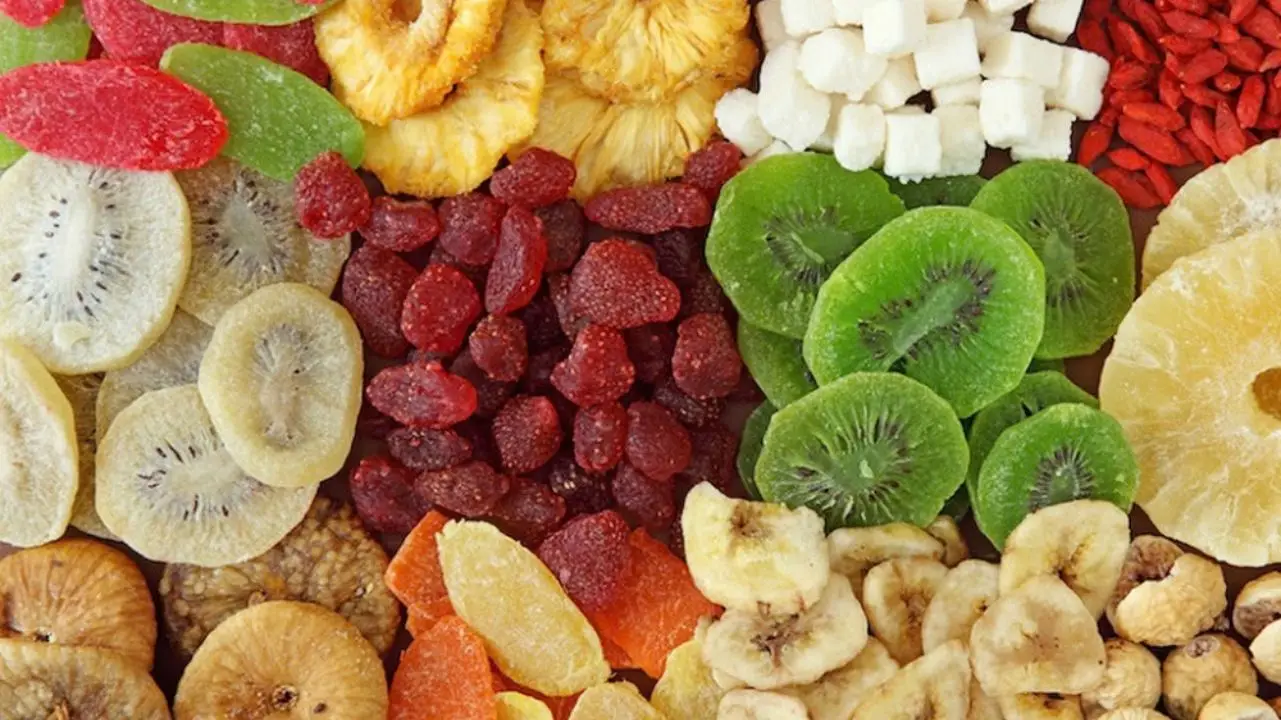

When an F&B business plans to launch a soft-dried fruit product under its own brand, the first questions often involve how the manufacturing process works, what raw material standards should be met, and what minimum order quantity is required.
This article explains the entire OEM soft-dried fruit manufacturing process, from raw material selection and processing to private label packaging. It is designed to give importers, distributors, and food brands a practical overview before choosing an OEM dried fruit manufacturing partner.
Why Should Businesses Choose OEM Soft-Dried Fruit Manufacturing?
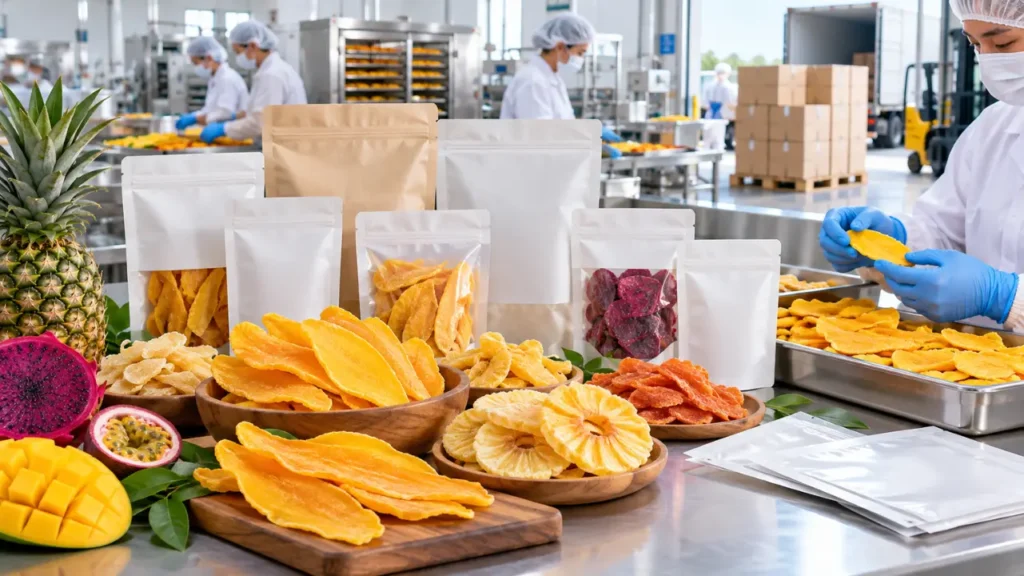
The OEM dried fruit manufacturing model has become a practical option for distributors, retail chains, and food brands looking to develop their own product lines.
Instead of investing heavily in factories, drying equipment, quality management systems, and production staff, businesses can allocate more resources to brand development, distribution, and marketing.
One of the main advantages of private label dried fruit is a potentially shorter route to market. By working with an existing manufacturer, brands can avoid building an entire production facility from the ground up and make use of the manufacturing capabilities already available.
OEM manufacturing can also help businesses manage fixed costs more efficiently. Rather than carrying the full cost of equipment depreciation, factory maintenance, and production workforce development, the company pays primarily for the manufacturing services associated with its actual orders.
This approach can be particularly useful for new brands that want to test market demand before making major investments in production infrastructure.
Vietnam also offers access to a wide range of tropical fruits that can be processed into dried fruit products. For international buyers, factors such as raw material availability, processing capabilities, logistics, and export requirements should all be evaluated when selecting a manufacturing partner.
OEM Soft-Dried Fruit Manufacturing Process: From A to Z
Each factory may adjust its process according to the fruit, formulation, production equipment, and customer requirements.
In general, a soft-dried fruit production process includes several key stages.
Raw Material Selection and Incoming Quality Control
Raw materials have a significant influence on the characteristics of the finished product.
For soft-dried mango, for example, manufacturers may prefer mango varieties with suitable natural sweetness, flesh thickness, fiber content, and aroma.
Incoming fruit should be evaluated according to the agreed raw material specifications. Depending on the product and destination market, this may include maturity, appearance, pesticide residue requirements, microbiological criteria, and other relevant quality parameters.
For an OEM project, buyers may also request specific sourcing requirements, such as fruit from designated growing regions or raw materials produced according to particular agricultural standards.
These requirements can affect the final product positioning, sourcing options, and overall production cost.
Traceability is another important consideration in OEM dried fruit manufacturing.
Depending on the quality management system, records may include information about raw material batches, suppliers, receiving dates, test results, and other details needed for traceability.
For export-oriented projects, buyers should confirm in advance which traceability documents are required by the destination market or their own procurement standards.
Pre-Processing and Raw Material Preparation
After receiving and inspecting the fruit, the raw materials move into the preparation stage.
Depending on the type of fruit, this may include:
- Washing
- Peeling
- Seed or pit removal
- Trimming
- Slicing
- Pre-treatment before drying
Consistent slice size is important because thickness can influence drying time, moisture distribution, texture, and product consistency.
Some formulations may also involve treatments designed to control oxidation, color, texture, or sweetness. The exact process should be determined according to the fruit type, product specification, and customer requirements.
For soft-dried fruit, slice thickness needs to be controlled carefully.
If the pieces are too thick, moisture removal may become less uniform. If they are too thin, the finished product may lose the soft and chewy texture expected from this product category.
Manufacturers therefore need to establish appropriate processing parameters for each type of fruit.
Drying Technology and Moisture Control
Soft-dried fruit differs from crispy dried fruit mainly in its intended texture and moisture characteristics.
The drying method used can vary depending on the product and the manufacturer’s production system.
Possible technologies may include:
- Hot-air drying
- Heat-pump drying
- Low-temperature drying
- Other drying systems suitable for the required product characteristics
The drying process must be monitored according to parameters such as temperature, time, airflow, and moisture level.
For OEM soft-dried mango, careful process control can help manufacturers achieve the desired balance of texture, color, flavor, and moisture.
Whatever drying method is used, the primary objective is to reach the agreed product specification consistently without creating excessive differences between the surface and interior of the fruit pieces.
The appropriate final moisture level should be determined according to the specific product formulation, processing method, packaging system, shelf-life validation, and customer requirements rather than applying one fixed figure to every soft-dried fruit product.
Sorting and Quality Control of Semi-Finished Products
After drying, the fruit may be sorted according to criteria such as:
- Size
- Color
- Shape
- Texture
- Moisture
- Visible defects
Pieces that do not meet the agreed specifications may be removed before packaging.
Depending on the product and destination market, the manufacturer may also conduct relevant quality or food-safety testing.
Testing requirements can vary and may include microbiological, chemical, contaminant, or other parameters agreed between the manufacturer and buyer.
For export orders, businesses should clarify in advance which test reports, Certificates of Analysis, or third-party laboratory reports are required for each shipment or production batch.
Private Label Packaging According to Brand Requirements
Packaging is one of the most visible parts of an OEM dried fruit manufacturing project.
Depending on the manufacturer’s capabilities, soft-dried fruit may be packed in different formats, such as:
- Stand-up pouches
- Resealable zipper bags
- Retail packs
- Trays
- Bulk packaging
- Other formats suitable for the intended sales channel
For a private label dried fruit project, packaging can be developed around the customer’s brand identity, including the brand name, logo, colors, product information, nutrition information, and legally required labeling elements.
The packaging system should also be suitable for maintaining the intended characteristics of the product during storage and distribution.
Material selection should take into account the type of food, barrier requirements, packaging format, and applicable food-contact requirements in the destination market.
Labeling requirements also vary between markets.
Depending on where the product will be sold, businesses may need to provide information such as:
- Product name
- Ingredient list
- Net weight
- Nutrition information
- Manufacturing or expiry information
- Storage instructions
- Allergen information where applicable
- Manufacturer, distributor, or importer information
For export projects, packaging artwork should be reviewed against the regulations of the target market before mass printing. For the U.S. market, food labeling requirements are regulated by the U.S. Food and Drug Administration (FDA). For the European Union, businesses should also review applicable food-contact material regulations, including requirements for plastic materials intended to come into contact with food
Key Factors When Choosing an OEM Dried Fruit Manufacturing Partner
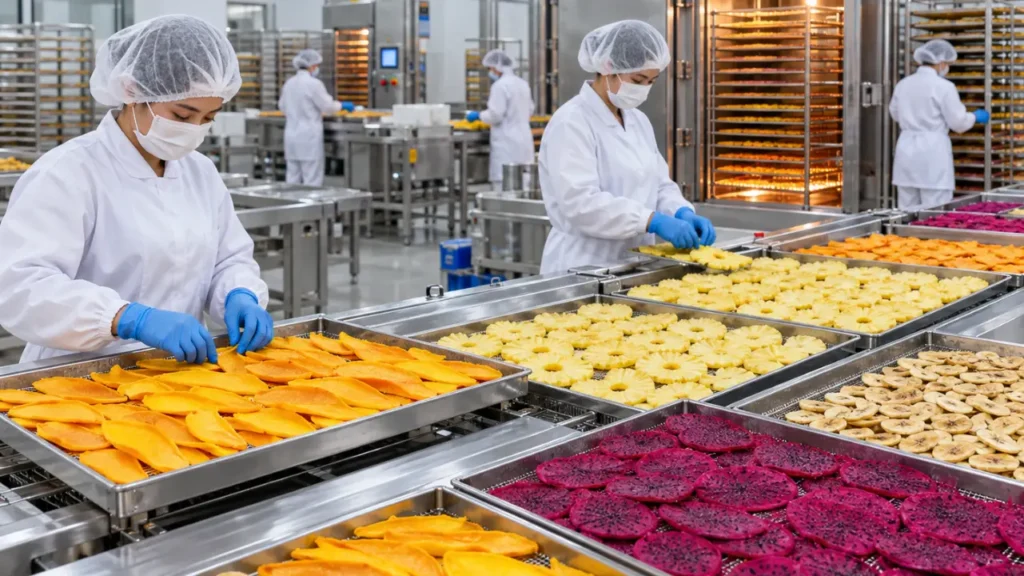
Selecting the right manufacturer is one of the most important decisions in a private label project.
Businesses should evaluate more than unit price alone.
Production Capability and Quality Management
Before selecting an OEM dried fruit manufacturer, businesses should assess whether the factory can support the expected order volume and product requirements.
Important areas to review may include:
- Production capacity
- Drying equipment
- Raw material sourcing
- Quality control procedures
- Traceability system
- Food-safety management
- Batch consistency
- Export documentation capabilities
Depending on the target market and buyer requirements, certifications or food-safety management systems may also be relevant.
Rather than assuming that one certification applies to every market, businesses should identify the requirements of the destination market and their distribution channel before confirming the project.
For organic products, the raw materials, processing system, certification scope, and labeling must meet the applicable organic requirements of the intended market.
MOQ and Production Flexibility
MOQ, or Minimum Order Quantity, refers to the minimum production quantity required by the manufacturer for a particular product or SKU.
For soft-dried fruit OEM projects, MOQ can vary according to:
- Fruit type
- Formulation
- Packaging format
- Packaging printing requirements
- Production setup
- Level of customization
New brands should discuss MOQ early in the project so that the initial order matches their market-testing strategy and inventory capacity.
In some cases, different packaging approaches may be available for pilot orders. The feasibility and cost of these options should be confirmed directly with the manufacturer.
Custom Product Development Capabilities
A suitable OEM partner may offer more than production based on an existing formula.
Depending on its R&D capabilities, the manufacturer may also work with customers on product development.
Possible customization requirements include:
- Sweetness level
- Texture
- Fruit variety
- Slice size
- Added ingredients
- Mixed-fruit combinations
- Packaging size
- Product positioning
For custom dried fruit manufacturing, businesses should discuss the technical feasibility of each proposed change.
For example, changing sugar content, moisture level, or ingredients may affect not only flavor and texture but also processing behavior, packaging requirements, shelf life, and manufacturing cost.
Sample development and product validation are therefore important before proceeding to full-scale production.
How Is the Cost of OEM Soft-Dried Fruit Manufacturing Calculated?
The cost of soft-dried fruit contract manufacturing depends on several components.
The main cost categories commonly include:
Raw Material Costs
Fruit prices can fluctuate according to:
- Season
- Variety
- Grade
- Origin
- Supply conditions
- Quality specifications
Products requiring certified, organic, or specially sourced raw materials may have a different cost structure.
Manufacturing Costs
Production costs can be influenced by:
- Drying technology
- Processing complexity
- Labor requirements
- Product yield
- Quality-control requirements
- Batch size
A more customized formulation may require additional testing and production adjustments compared with a standard product.
Packaging Costs
Packaging can represent a significant part of the overall project cost, particularly for private label products.
Factors affecting packaging costs may include:
- Packaging material
- Pack size
- Printing method
- Order quantity
- Number of printed colors
- Custom artwork
- Barrier requirements
- Carton and secondary packaging
Businesses should request a quotation based on the specific product configuration rather than comparing only a headline unit price.
Order Volume and Additional Requirements
Pricing may also vary according to:
- Total order volume
- Number of SKUs
- Production schedule
- Testing requirements
- Required documents
- Certification requirements
- Custom packaging
A detailed quotation makes it easier for businesses to compare different manufacturing options on the same basis.
Private Label Soft-Dried Fruit Market Trends
Soft-dried fruit continues to attract interest from brands positioned in the snack and processed-fruit categories.
Consumers in many markets are increasingly paying attention to factors such as ingredient transparency, added sugar, product origin, and convenience.
This creates opportunities for private label dried fruit brands to develop products for different segments.
Common tropical dried fruit products include:
- Soft-dried mango
- Dried banana
- Dried pineapple
- Dried papaya
- Dried jackfruit
- Other tropical fruit products
However, businesses should not assume that the same product concept will perform equally well in every market.
Before developing an export-focused product, brands should research the food-safety requirements, labeling regulations, consumer preferences, price positioning, and distribution channels of the intended market.
Products with reduced or no added sugar are also receiving more attention in some markets.
For this type of product, raw material characteristics and processing conditions become particularly important because changes in formulation can affect sweetness, texture, shelf stability, and production performance.
Sustainable packaging is another consideration for brands targeting certain consumer segments.
Businesses may explore recyclable, reduced-material, or other packaging solutions where technically and commercially appropriate, but should also evaluate food protection, shelf-life requirements, and overall cost.
Common Mistakes to Avoid When Ordering OEM Dried Fruit
Businesses working with an OEM manufacturer for the first time can encounter problems if key requirements are not clarified at the beginning.
One common mistake is failing to establish detailed product specifications before production.
This can lead to differences in:
- Sweetness
- Texture
- Moisture
- Slice size
- Color
- Packaging
- Finished-product appearance
Another mistake is selecting a supplier based mainly on price without sufficiently evaluating production capability, quality control, and documentation.
Packaging timelines can also cause delays.
Custom printed packaging often requires artwork confirmation, print preparation, production, and regulatory review before the final product can be packed.
Businesses should therefore build packaging development into the project timeline.
Requesting samples before commercial production is also important.
The approved sample, specification, quality criteria, delivery terms, and procedures for handling non-conforming products should be clearly documented before mass production.
For higher-value or long-term projects, businesses may also consider conducting a factory assessment themselves or using an independent third-party audit where appropriate.
Finally, agricultural raw materials are affected by seasonality, climate, and supply conditions.
Businesses planning regular orders should therefore discuss raw material sourcing and supply continuity with their manufacturing partner rather than focusing only on a single production batch.
Conclusion
OEM soft-dried fruit manufacturing requires close coordination between the brand and the manufacturer throughout the entire process, from raw material selection and product development to quality control and private label packaging.
For importers, distributors, and food brands, choosing the right manufacturing partner means evaluating not only price, but also production capabilities, quality management, product customization, MOQ, packaging options, documentation, and supply reliability.
Businesses can also review representative products such as Soft-Dried Mango and Soft-Dried Papaya to better understand possible product formats and finished-product characteristics before developing their own private label range.
VILIFA supplies and exports Vietnamese agricultural products, including dried fruits and other value-added agricultural products.
Businesses looking for an OEM soft-dried fruit manufacturing partner can contact VILIFA to discuss product requirements, raw materials, expected order quantities, packaging formats, private label needs, and target markets.
Specific manufacturing capabilities, MOQ, product specifications, packaging options, and project requirements should be confirmed based on each individual product and order.