


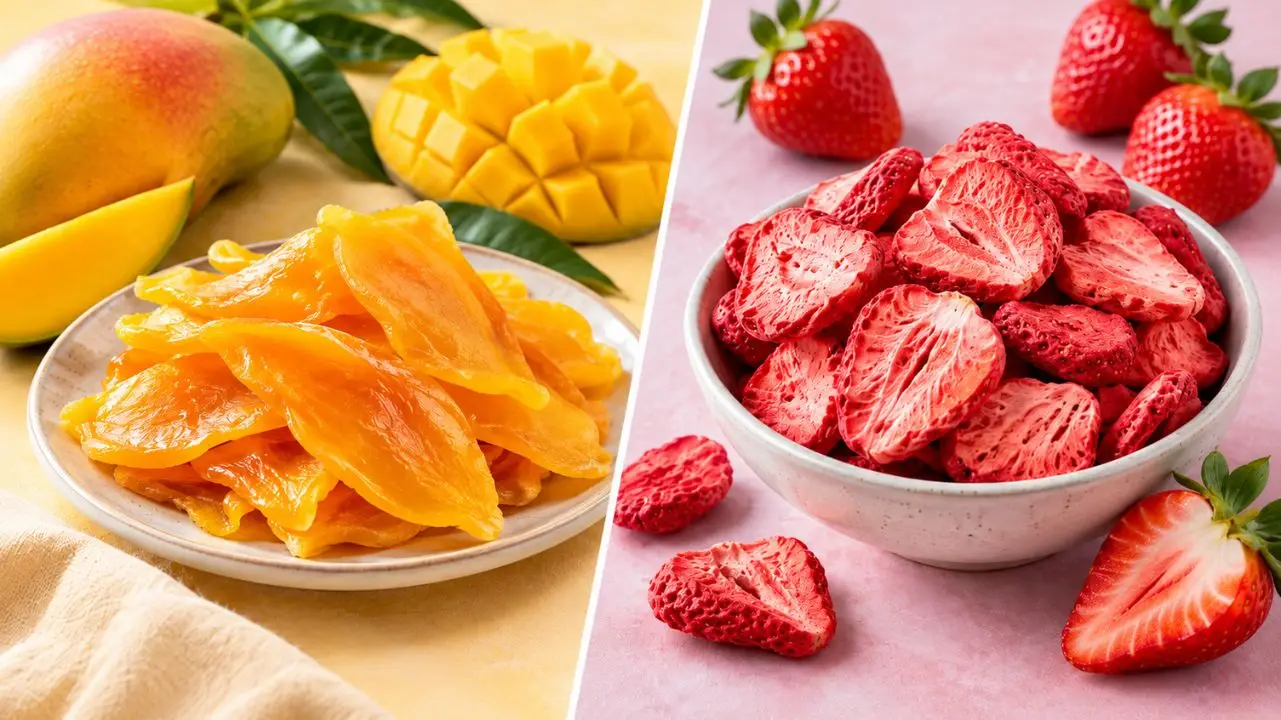

OEM dried fruit manufacturing for export is becoming a strategic option for e-commerce sellers that want to launch their own branded product lines without investing in a manufacturing facility.
In the dried fruit industry, OEM (Original Equipment Manufacturer) refers to a production model in which a factory manufactures products according to the specifications of another brand. The e-commerce seller places the order, while the manufacturer handles production, packaging, and labeling based on the buyer’s brand identity. The finished product is sold under the seller’s brand rather than the factory’s own brand.
The global dried fruit snack market continues to grow steadily, supported by the trend toward healthier snacking. Consumers in the United States, the EU, Japan, South Korea, and Australia are increasingly interested in products positioned as lower in sugar, preservative-free, and plant-based.
This creates opportunities for small brands and online sellers that want to build their own product lines without investing in a factory.
For e-commerce sellers, OEM dried fruit manufacturing can help shorten time to market, manage product quality according to export requirements, and optimize costs compared with in-house production. This model is increasingly used by private label snack brands looking to expand their product portfolios.
Benefits of Dried Fruit Manufacturing for Export for E-commerce Sellers
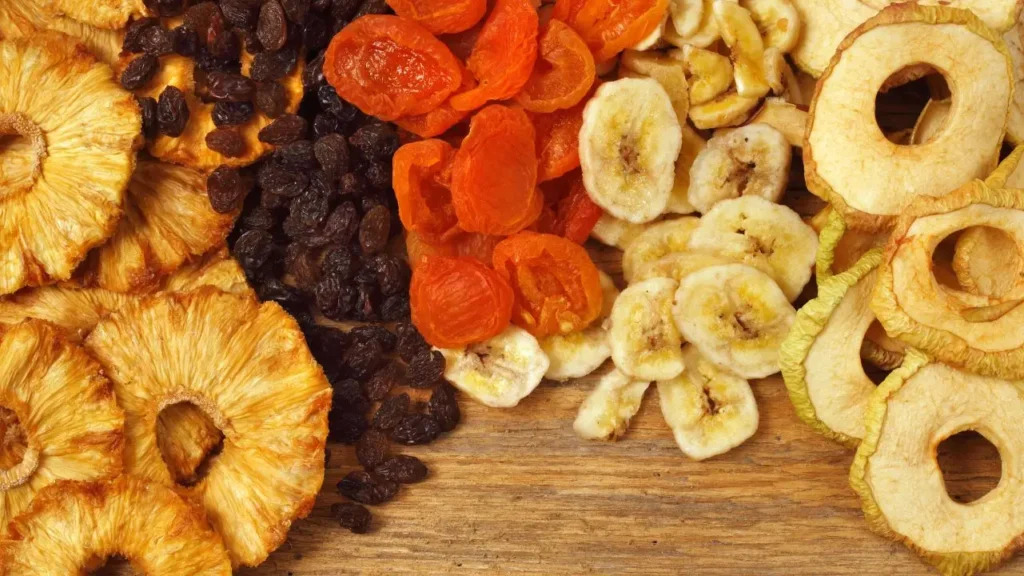
E-commerce sellers face intense competition in both pricing and brand differentiation. OEM manufacturing can address several key challenges.
No need to invest in a production line: An export-oriented dried fruit factory requires significant investment in drying equipment, quality-control systems, food-safety management, and production staff. OEM manufacturing allows sellers to focus their resources on marketing, sales, and customer service.
Flexible product specifications and packaging: Sellers may request smaller production quantities to test the market before gradually scaling up. Packaging, labeling, bag sizes, and product weights can also be customized according to the brand strategy.
Access to a stable raw material supply: Export factories often work with supply chains linked to fruit-growing regions, helping them manage seasonal availability and maintain more consistent raw material quality. This is especially important for agricultural products affected by weather and harvest seasons.
Support for international standards: Export-oriented manufacturers may already have relevant food-safety systems, documentation, and certifications for specific target markets, helping sellers prepare products for supermarkets or international marketplaces.
Shorter product-development time: Manufacturers with experience serving different markets can provide guidance on formulation, moisture levels, and product sizing. Sellers therefore do not need to spend months developing formulas or sourcing raw materials independently.
Lower inventory risk: If the manufacturer allows production in smaller batches, online sellers can adjust order volumes according to actual market demand rather than committing to large quantities from the beginning.
Popular OEM Dried Fruit Products for Private Label Brands
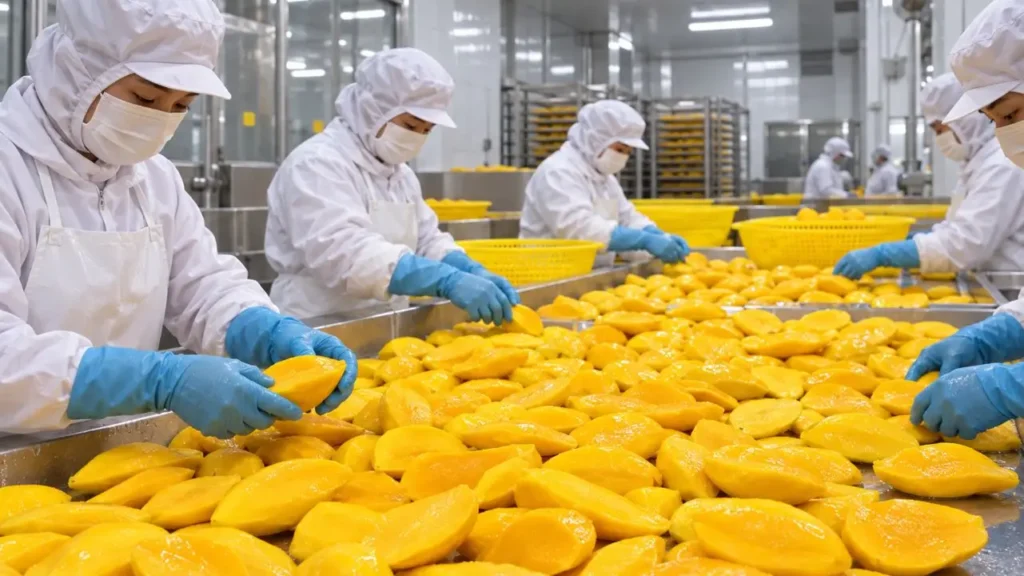
Not every type of fruit is equally suitable for drying and export. Below are several product categories that are popular in international markets and may offer good opportunities for private label sellers.
Soft-Dried Mango (Dried Mango OEM)
Dried mango is one of the key dried fruit products manufactured by many factories in Vietnam.
Dried mango OEM is commonly available in two main formats: soft-dried mango with controlled moisture and natural sweetness, and crispy mango produced using methods such as freeze-drying or vacuum drying.
No-added-sugar and reduced-sugar dried mango products are popular in the U.S. and European markets, especially in convenient resealable pouches.
If you are considering this product category, you can also review Soft-Dried Mango to better understand common specifications and market potential.
Crispy Dried Banana
Crispy dried banana is a competitively priced product that is accessible to mass-market consumers.
It is suitable for the mid-range healthy snack segment and can be packaged in stand-up pouches or small retail containers.
Dried Jackfruit
Both soft-dried and crispy dried jackfruit serve different market segments.
Soft-dried jackfruit has a rich natural sweetness that suits many Asian consumers, while crispy dried jackfruit can be positioned as a tropical healthy snack for Western markets.
Crispy Dried Sweet Potato, Taro, and Okra
Crispy dried vegetables are gaining popularity as alternatives to conventional potato chips.
Sellers can also combine several products in a mixed snack pack to create greater differentiation.
Freeze-Dried Fruit
Freeze-dried fruit can retain much of the fruit’s original color, flavor, and nutritional characteristics.
Production costs are generally higher, but these products can be positioned in premium segments.
Freeze-dried durian, mango, and dragon fruit are notable options for private label brands looking to create more distinctive product lines.
Soft-Dried Papaya
Soft-dried papaya has an attractive color, mild sweetness, and characteristic chewy texture.
The product is suitable for tropical fruit snack segments in Asian markets and is gradually gaining recognition in Europe.
You can also review Soft-Dried Papaya to learn more about common packaging formats.
Dried Fruit Manufacturing for Export: OEM Production Process
Understanding the manufacturing process helps sellers work more effectively with factories and maintain better control over final product quality.
A typical OEM dried fruit manufacturing process for export generally includes the following steps.
Step 1: Discuss Product Requirements
The seller provides information about:
- Fruit type
- Drying method
- Product weight
- Quality standards
- Target market
- Expected budget
The manufacturer evaluates feasibility and recommends a suitable production approach.
Step 2: Sample Development and Testing
The manufacturer produces samples according to the agreed requirements.
The seller evaluates the flavor, texture, color, shelf life, and other product characteristics before providing feedback for adjustment.
This stage may be repeated several times until the sample meets the agreed standard.
Step 3: Finalize Product Specifications and Packaging
Both parties agree on bag size, packaging material, label design, and nutrition information according to the regulations of the target market.
The manufacturer may also support the seller in reviewing labeling requirements to reduce customs or regulatory risks.
Step 4: Mass Production and Quality Control
The factory begins production according to the confirmed order.
Throughout the process, the quality-control team may monitor parameters such as moisture, microbiological criteria, and pesticide residues according to the agreed standards.
Step 5: Packaging and Delivery
Finished products are packed, labeled, placed into cartons, and delivered according to the agreed commercial terms.
For export orders, the manufacturer may prepare documents such as C/O, C/Q, and phytosanitary certificates when required.
How to Choose a Reliable OEM Dried Fruit Manufacturer for Export
Not every factory can meet the requirements of international markets.
Before signing a contract, sellers should carefully evaluate several important factors.
Food Safety and Quality Certifications
Export manufacturers should have relevant food-safety systems and certifications for their target markets, such as HACCP, ISO 22000, applicable U.S. FDA requirements, or organic certification where products are positioned as organic.
Sellers should request supporting documentation and verify that certificates are still valid.
International standards such as Codex Alimentarius can also serve as useful references for understanding global food-safety requirements.
Production Capacity and Lead Time
Sellers should confirm the factory’s maximum production capacity, standard lead time, and ability to handle urgent orders.
For e-commerce businesses, running out of stock during peak sales periods can have a significant impact on revenue.
Minimum Order Quantity (MOQ)
A relatively low MOQ can be an advantage for new sellers entering the market.
However, very small orders may result in higher unit costs.
Sellers therefore need to balance available capital, inventory risk, and competitive pricing.
Customization and R&D Support
A manufacturer with strong R&D capabilities can help sellers create differentiated products, from seasoning formulas to texture and product format.
This is especially important as the dried fruit snack market becomes increasingly competitive.
Raw Material Traceability
Consumers are paying more attention to product origin.
Manufacturers with their own growing areas or strong relationships with farmers may be better positioned to provide transparent traceability information.
Export Experience
A factory that has successfully supplied products to your target market is likely to be more familiar with relevant inspection requirements, documentation, and local market expectations.
Where possible, sellers can request information about previous export markets and customer references.
Common Challenges in OEM Dried Fruit Orders and How to Handle Them
OEM dried fruit manufacturing does not always proceed smoothly.
Sellers should identify potential risks early and prepare appropriate solutions.
Inconsistent Quality Between Batches
Fruit is a natural agricultural product, so quality can vary according to season and growing conditions.
One solution is to request an approved reference sample signed off by both parties. This sample can then be used as a benchmark for future production batches.
Extended Lead Times
OEM orders require time for raw material preparation, production, and packaging.
The source article recommends placing orders at least 60–90 days before the required delivery date, particularly during holiday seasons.
Labeling and Market-Regulation Issues
Each market may have different requirements relating to nutrition labeling, allergen warnings, language, and other mandatory information.
Sellers should work with regulatory consultants or experienced manufacturers familiar with the destination market.
Unexpected Additional Costs
Additional costs may include:
- Sample-development fees
- Packaging-design costs
- Additional laboratory testing
- Certification-related expenses
These costs should be clearly specified in the contract from the beginning to avoid misunderstandings.
Intellectual Property and Brand Risks
When working with an OEM manufacturer, sellers should consider signing a Non-Disclosure Agreement (NDA).
The contract should also clearly define ownership of product formulas, packaging designs, and other brand assets.
This helps protect the seller’s intellectual property from unauthorized use.
Dried Fruit Market Trends in 2026 and Opportunities for Online Sellers
E-commerce sellers need to understand market trends to make better product-development decisions.
Reduced-Sugar and No-Added-Sugar Products
Consumers are becoming more sensitive to the amount of sugar in snack products.
Dried fruit with no added sugar, or products using natural sweetening alternatives such as monk fruit extract, are attracting growing attention in North American and European markets.
Sustainable Packaging
Kraft-paper pouches, biodegradable packaging, and water-based printing are increasingly used to appeal to environmentally conscious consumers.
Many manufacturers are beginning to offer more sustainable packaging options for OEM projects.
Functional Snacks
Dried fruit combined with ingredients such as probiotics, collagen, or superfoods is creating new product segments.
This may offer opportunities for brands targeting premium or specialized consumers.
Diversified Sales Channels
In addition to Amazon, sellers can explore:
- TikTok Shop
- Etsy
- Direct-to-consumer platforms
- Local health-food stores
- Other online marketplaces
OEM products with attractive packaging and a clear brand story may have an advantage on channels where visual presentation and brand differentiation strongly influence purchasing decisions.
Supply-Chain Transparency
Modern consumers increasingly want to know where products come from and how they are manufactured.
Private label brands can use stories about growing regions, drying processes, and quality commitments to build trust.
This is also one reason many sellers prefer OEM dried fruit manufacturers for export with clear traceability systems.
Conclusion
OEM dried fruit manufacturing for export is a strategic option for e-commerce sellers that want to build their own branded product lines without investing in a factory.
Success depends on selecting the right manufacturing partner, maintaining consistent quality control, and understanding the requirements and trends of the target market.
VILIFA is a dried fruit producer, supplier, and exporter of Vietnamese agricultural products.
If you are looking for an OEM dried fruit manufacturer for export for your brand, contact VILIFA to discuss production capabilities, certifications, MOQ policies, and potential cooperation models.