



When developing beverage or ice cream formulations, one question comes up frequently: should you choose frozen mango puree or mango dices?
There is no single answer that applies to every application. The right choice depends on the final product you want to create. Do you need a smooth, consistent base for a smoothie, or do you want customers to experience real mango pieces in a fruit tea?
For food manufacturers and F&B chains, understanding the different applications of these two mango formats can help reduce preparation time, improve production efficiency, and maintain more consistent product quality from batch to batch.
What Is Frozen Mango Puree and How Is It Produced?
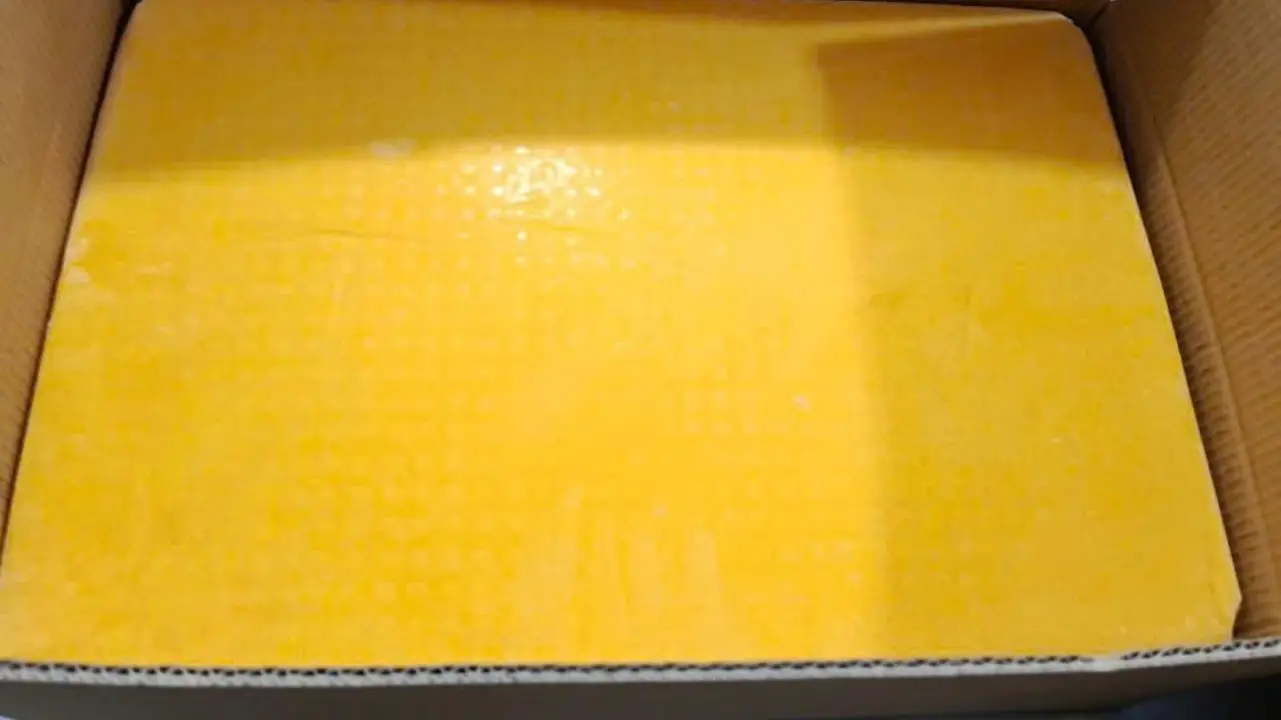
Frozen mango puree, also known as mango pulp, is made from ripe mango flesh that is processed into a smooth consistency before being frozen for storage and transportation.
It is commonly supplied in larger packs for food manufacturers or smaller formats for beverage shops and foodservice businesses.
A typical production process may include selecting ripe mangoes that meet the required Brix level, washing and peeling the fruit, removing the seed, refining the pulp to reduce fiber, homogenizing the mixture, applying heat treatment when required, packing, and freezing.
The refining process gives mango puree its smooth texture, which is very different from mango dices, where the fruit structure remains intact.
Frozen mango puree is not limited to beverage applications. In bakery and dessert production, it can also be used for fillings, sauces, toppings, and fruit-based preparations.
Compared with relying on fresh seasonal mangoes, frozen puree can also help manufacturers maintain a more stable supply of mango ingredients throughout the year.
Applications of Frozen Mango Puree by Industry
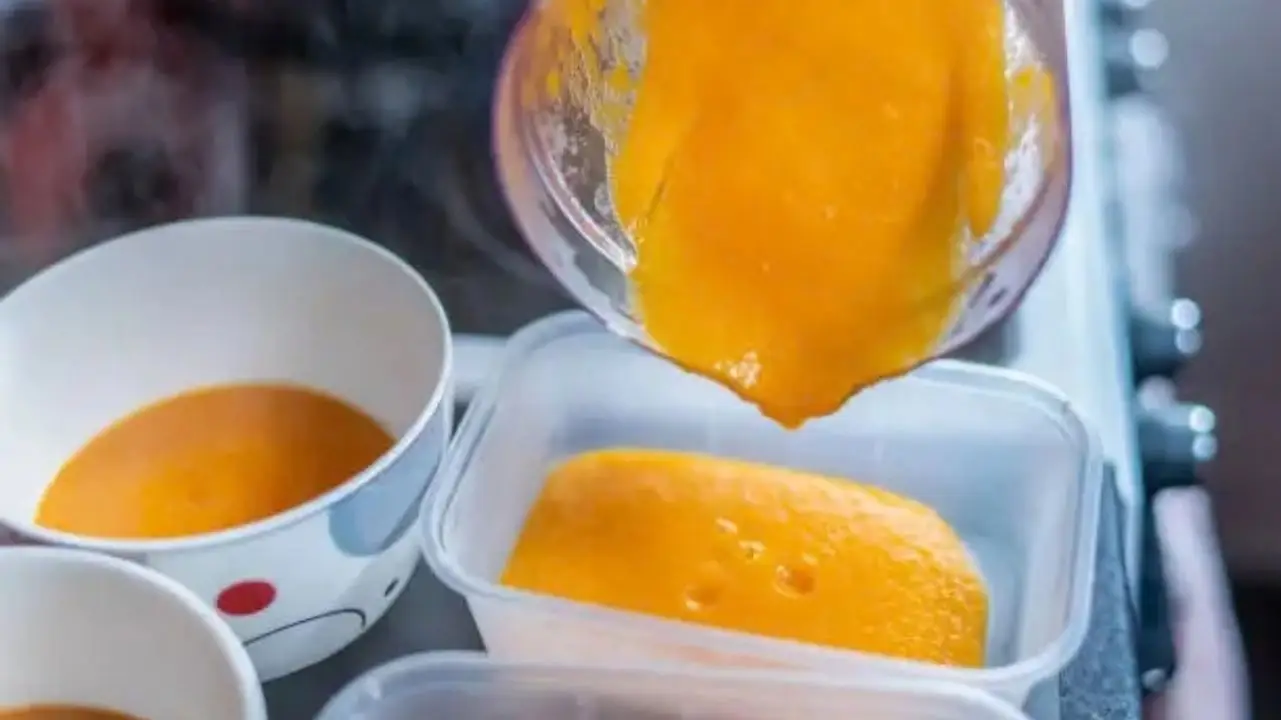
Beverage Industry
In milk tea, smoothies, blended drinks, cocktails, and other fruit beverages, frozen mango puree can help:
- Create a smooth and naturally thick texture
- Deliver an attractive mango color
- Maintain more consistent sweetness between batches
- Blend easily with milk, tea, ice, and other ingredients
For beverage chains with multiple locations, puree can also make recipe standardization easier and reduce dependence on fresh mango availability during different seasons.
Ice Cream and Frozen Desserts
Mango ice cream requires a smooth and consistent fruit base.
Using mango puree allows the fruit component to blend evenly into the ice cream mixture without leaving large pieces of fiber or fruit.
It can also make it easier for manufacturers to control factors such as fruit concentration, sweetness, and formulation consistency.
For mango sorbet, puree is particularly suitable because the texture and flavor of the finished product depend heavily on the quality of the fruit base.
Bakery and Desserts
Frozen mango puree can be used in products such as:
- Mousse cakes
- Cheesecakes
- Fruit fillings
- Dessert sauces
- Glazes and toppings
Its smooth consistency makes it easier to incorporate into fillings and sauces while helping manufacturers maintain a more consistent mango flavor and appearance across production batches.
Key Differences Between Frozen Mango Puree and Mango Dices
Before deciding which format to use, businesses should first understand how the two ingredients differ in terms of texture, processing, and application.
Texture and Eating Experience
Frozen mango puree creates a smooth base that blends completely into beverages, ice cream, sauces, or fillings.
Mango dices retain their shape and provide a more noticeable fruit texture, making them suitable for products where consumers are expected to see or bite into real mango pieces.
Yield and Portion Control
With puree, most of the supplied product can be incorporated directly into the formulation without the peeling, seed removal, or trimming losses associated with fresh mango.
Frozen mango dices also provide more predictable portioning than fresh fruit, although thawing conditions and released juice still need to be managed depending on the application.
Consistency Between Batches
Mango puree produced from the same production batch can provide relatively consistent color, sweetness, acidity, and texture.
This is particularly useful for F&B chains, where customers expect the same mango smoothie or dessert to taste similar across different locations.
Mango dices may naturally show more variation in texture, ripeness, and appearance from piece to piece.
Preparation Time
Once properly thawed, mango puree can often be incorporated directly into a recipe without additional blending.
Mango dices may require additional preparation or blending when they are used as the main fruit base in smoothies or other beverages.
For high-volume operations, reducing these preparation steps can help improve service speed and production efficiency.
When Should You Use Frozen Mango Puree Instead of Mango Dices?
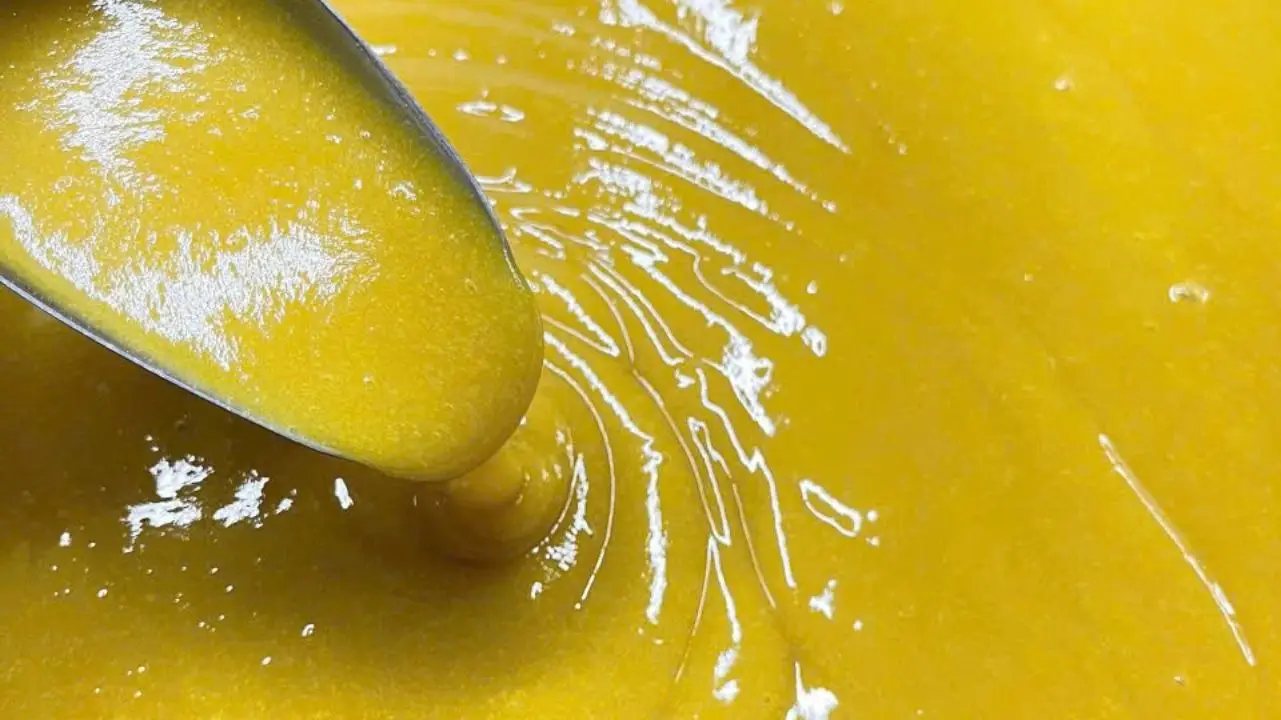
Not every product is better suited to puree. However, there are several applications where frozen mango puree offers clear operational advantages.
Smoothies and Blended Beverages
For mango smoothies, fruit shakes, and blended drinks, puree provides a smooth and consistent fruit base.
It can reduce preparation time and help operators control the amount of mango used in each serving.
For beverage chains, a standardized puree can also make it easier to reproduce the same recipe across multiple stores.
Mango Ice Cream and Sorbet
Smooth texture is particularly important in ice cream and sorbet production.
Frozen mango puree integrates more evenly into the formulation than larger fruit pieces and avoids noticeable fibers or chunks where a smooth texture is required.
In mango sorbet, puree is often a practical fruit base because the final texture depends largely on the balance between fruit solids, sugar, water, and freezing conditions.
Fruit Sauces and Pourable Toppings
Mango sauces used for yogurt, cakes, desserts, milk tea, or ice cream require a relatively smooth and pourable consistency.
Puree can serve as a convenient base for these products, while mango dices normally require additional blending or refining before they can be turned into a smooth sauce.
Bottled Beverages and Industrial Production
For manufacturers producing mango juice, nectar, fruit beverages, or other bottled products, puree can be easier to pump, measure, mix, and process on a production line.
Industrial systems generally benefit from ingredients with controlled particle size and predictable consistency, whereas mango dices are better suited to products where visible fruit pieces are part of the desired product experience.
When Should You Keep Mango Dices?
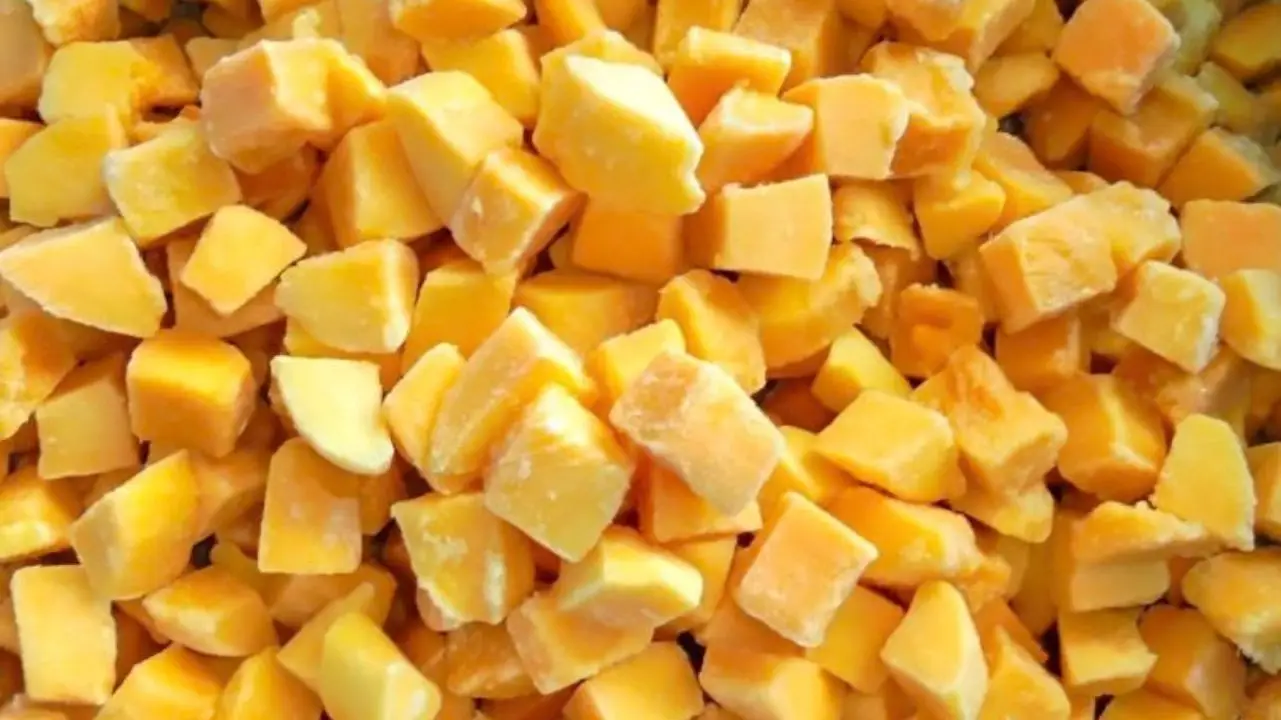
Mango dices remain the better option when the recipe requires the appearance and eating experience of real fruit pieces.
They can be suitable for:
- Fruit teas
- Mango yogurt
- Dessert toppings
- Fruit cups
- Mango-based desserts
- Products where visible fruit pieces are part of the presentation
They can also help brands communicate a stronger “real fruit” experience when visible mango pieces are important to the final product.
In many applications, businesses can also combine both formats.
For example, mango puree can be used as the beverage base while mango dices are added as a topping. This approach allows the formulation to benefit from the smooth consistency of puree while still providing the texture of real mango pieces.
How to Evaluate Frozen Mango Puree Quality
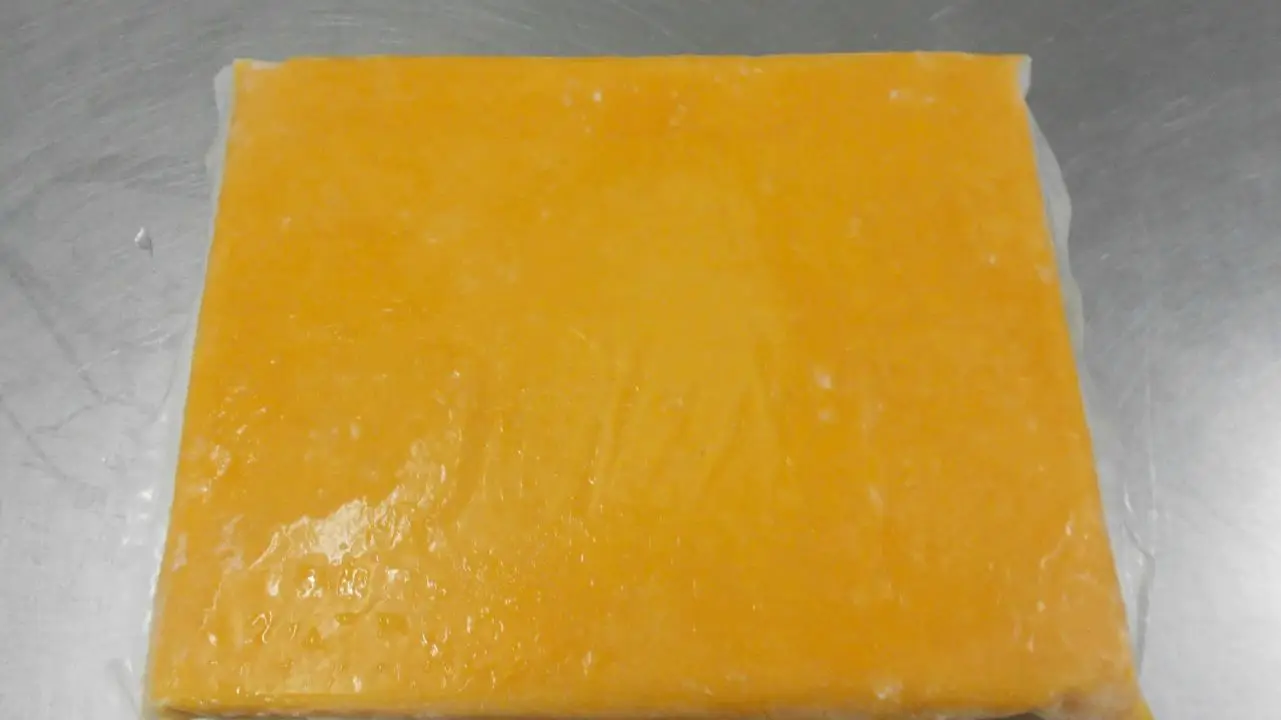
For importers and food manufacturers, selecting mango puree should be based on clearly defined technical specifications rather than appearance alone.
Important factors may include:
Brix
Brix indicates the concentration of soluble solids in the product and is commonly used as an indicator related to sweetness in fruit ingredients.
The required Brix level depends on the product specification and intended application.
Consistent Brix can make formulation adjustments easier for beverage and food manufacturers.
pH
pH indicates the acidity or alkalinity of the product.
It may influence flavor balance, product formulation, and processing requirements.
Fiber Content and Particle Size
The degree of refinement affects the smoothness of the puree.
A finer puree may be more suitable for beverages, ice cream, sauces, and other applications where a smooth texture is important.
Color
The expected mango color should be defined in the product specification.
Significant browning or unexpected color changes after thawing may indicate processing, storage, or oxidation issues that require further evaluation.
Freezing Method
Freezing conditions can influence the physical quality of fruit products.
The appropriate method should be evaluated together with the product specification, packaging, storage temperature, and intended application.
Quick Comparison: Mango Puree vs. Mango Dices
| Criteria | Mango Puree | Mango Dices |
|---|---|---|
| Texture | Smooth and uniform | Retains fruit pieces |
| Main applications | Beverages, ice cream, bakery, sauces | Toppings, yogurt, desserts, fruit beverages |
| Flavor consistency | Generally higher | May vary between pieces |
| Preparation required | Lower | Higher for blended applications |
| Yield | High | Depends on format and application |
| Eating texture | No fruit pieces | Noticeable fruit pieces |
| Best suited for | Formulation and processing | Products requiring visible fruit |
In addition to these characteristics, importers and food manufacturers should review relevant food-safety documentation and product testing requirements for each shipment.
Technical requirements may vary depending on the destination market, product specification, customer requirements, and intended use.
Codex Alimentarius also provides internationally recognized guidance related to food hygiene, processing, and labeling that can be used as a reference when evaluating processed fruit products.
Storage and Thawing of Frozen Mango Puree
Frozen mango puree is generally stored under frozen conditions, commonly at –18°C or below, subject to the product specification provided by the manufacturer.
When thawing, the product should be handled under controlled refrigerated conditions according to the supplier’s instructions and the food-safety procedures of the facility.
Gradual thawing under refrigeration can help maintain more consistent product quality than rapid exposure to uncontrolled temperatures.
For industrial applications, larger blocks of thawed puree may require gentle mixing before being pumped into the production line to restore uniform consistency.
The acceptable holding time after thawing should follow the supplier’s specification, product characteristics, packaging conditions, and the food-safety procedures used by the facility.
For beverage shops and smaller F&B operations, portion-controlled packaging can also help reduce unnecessary thawing and product waste.
Conclusion
Frozen mango puree is particularly suitable for applications that require a smooth, consistent fruit base and efficient preparation, including smoothies, ice cream, sorbet, sauces, bakery products, and industrial beverage production.
Mango dices serve a different purpose. They are more suitable when the finished product needs visible fruit pieces, a noticeable mango texture, or a stronger real-fruit eating experience.
Rather than asking which format is universally better, businesses should consider how the mango ingredient will be used in the final product.
Choosing the right format can help improve product consistency, simplify production, reduce unnecessary preparation, and support more efficient operations.
VILIFA supplies frozen mango ingredients and processed agricultural products for importers, distributors, food manufacturers, and F&B businesses. Companies looking for a stable mango ingredient supply can contact VILIFA to discuss product specifications, packing options, samples, and sourcing requirements.
You can also explore VILIFA Frozen Mango to compare different mango formats for specific beverage, dessert, and food manufacturing applications.